Product details
Description and application notes
Consolidated Multi-Brand Sourcing — Procure this specific FAG unit alongside SKF or NSK equivalents in a single mixed-brand shipment without juggling multiple vendors.
Technical Specifications
| Parameter | Value |
|---|---|
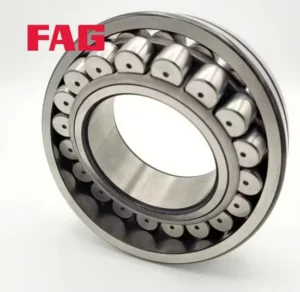
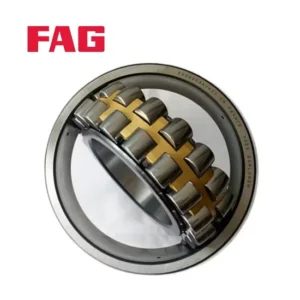
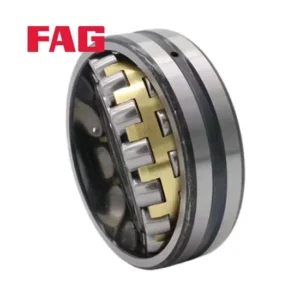
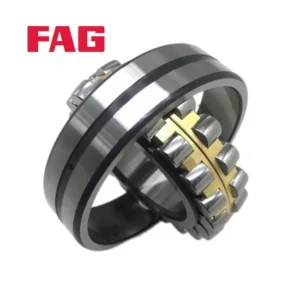
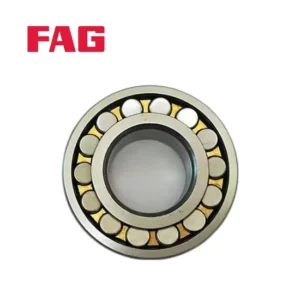
| Designation | FAG 22207-E1-XL-C3 |
| Bearing Type | Spherical Roller Bearing |
| Structure | Double Row, Self-Aligning |
| Bore Type | Cylindrical |
| Material | Chrome Steel Gcr15 |
| Clearance Class | C3 |
| Origin | Jiangsu China |
Application Suitability
| Industry | Typical Applications |
|---|---|
| Mining & Aggregates | Vibrating screens and primary jaw crushers |
| Metallurgy | Steel mill continuous casting equipment and roller tables |
| Pulp & Paper | Paper machine dryer section felt rolls |
Why Spherical Roller Bearings Fail in High-Heat Crushing Environments
Thermal expansion often destroys internal clearance long before the steel itself fatigues.
Early in my career transitioning from procurement to sales, I supplied a cement plant in Riyadh with standard clearance bearings instead of C3 variants for their kiln exhaust fans. The ambient heat combined with operational friction caused the internal clearance to vanish, leading to catastrophic seizure and unplanned downtime. When specifying a FAG 22207-E1-XL-C3 spherical roller bearing for similar high-temperature zones, verifying the exact thermal profile is non-negotiable. The inner ring expands faster than the outer raceway under intense heat, and without adequate initial clearance, the rolling elements become trapped, generating massive friction that ultimately destroys the cage and smears the rollers.
Matching the FAG 22207-E1-XL-C3 spherical roller bearing to Heavy-Duty Cycles
Heavy machinery demands components that tolerate severe misalignment without sacrificing load capacity or structural integrity. Our global sourcing network ensures this specific double-row configuration reaches your facility with full traceability, eliminating the guesswork often associated with gray market MRO replacements. We carefully cross-reference dimensional tolerances against official catalogs to guarantee the self-aligning geometry performs exactly as engineered. By validating the specific clearance class before dispatch, we prevent the costly field failures that occur when procurement teams accidentally substitute standard units into high-heat applications.
Managing Radial Loads and Thermal Growth in Vibratory Equipment
Vibrating screens subject rolling elements to intense cyclic radial loads combined with persistent shock impacts and continuous oscillatory motion. In these aggressive environments, standard internal clearances quickly close up as the shaft and housing reach thermal equilibrium during continuous shifts. Selecting a C3 clearance class provides the necessary thermal buffer, allowing the rolling elements to maintain optimal contact angles even when operational temperatures climb significantly. Proper lubrication intervals further mitigate the friction heat generated by the constant vibrating motion, ensuring the grease does not degrade and leave the raceways unprotected.
Decoding the C3 Clearance and Self-Aligning Geometry
The defining characteristic of this configuration is the C3 radial internal clearance, which is intentionally manufactured larger than standard CN clearances. This extra internal space accommodates the thermal expansion of the shaft and housing during continuous operation in crushers or steel mill equipment. The double-row self-aligning structure features a spherical outer raceway, allowing the inner ring and roller assembly to pivot slightly within the outer ring. This geometric forgiveness compensates for minor shaft deflections and mounting misalignments, preventing destructive edge loading on the rollers. Available in Chrome Steel Gcr15 variants, the material provides the necessary core hardness and fatigue resistance to withstand these punishing dynamic forces without premature spalling.
The Hidden Downtime Costs of Incorrect Clearance Selection
Installing a standard clearance bearing in an application requiring C3 clearance inevitably leads to rapid and catastrophic premature failure. As the operating temperature rises, the shaft expands faster than the housing, systematically eliminating the internal operating clearance until the components bind. This results in excessive friction, localized overheating, and eventual cage destruction or severe roller smearing across the raceway. According to established failure analysis frameworks, a significant share of premature bearing failures stems directly from such fundamental selection errors rather than inherent material defects. The resulting unplanned downtime, emergency freight costs, and secondary damage to adjacent mechanical components far exceed the initial component cost.
Securing Authentic Traceability for Critical MRO Replacements
Counterfeit bearings often fail to meet the precise metallurgical standards required for heavy-duty industrial applications, leading to unpredictable fatigue life. We source exclusively from verified global channels, providing complete batch traceability for every single unit shipped from our consolidation warehouses. Our technical team specifically audits the clearance class and suffix designations, as confusing a standard unit with a C3 variant is a common procurement trap that leads to immediate field failures. We offer flexible consolidation shipping, allowing you to combine this order with other maintenance spares in a single container to optimize freight costs. Furthermore, our cross-brand equivalent consultation helps you identify suitable alternatives if specific lead times become a constraint for your maintenance schedule.
Documentation & Authenticity
- Certificate of Conformity verifying the C3 clearance class and original manufacturing batch.
- Official QR code traceability linking directly to the manufacturer's production facilities.
- Material inspection reports confirming Chrome Steel Gcr15 metallurgical composition.
- Dimensional inspection records validating the spherical outer raceway tolerances.
- Origin documentation supporting customs clearance for international MRO shipments.
Storage, Handling & Mounting
- Keep the original packaging sealed until installation to protect the high-carbon chromium steel surfaces from ambient humidity.
- Store in a temperature-controlled environment to prevent condensation inside the double-row roller assembly.
- Use induction heaters for the inner ring mounting to preserve the precise C3 internal clearance.
- Avoid dropping the unit, as impact shocks can cause permanent brinelling on the spherical outer raceway.
- Apply the recommended lubricant immediately after mounting to protect the self-aligning surfaces during initial startup.
Engineering Review and Procurement Next Steps
To ensure optimal performance of your FAG 22207-E1-XL-C3 spherical roller bearing, please provide your specific radial and axial load profiles, operating temperatures, and rotational speeds. Sharing the OEM equipment serial number allows our engineering team to perform a precise cross-reference check and verify the L10 life calculations. Detailing the environmental exposure, such as dust ingress or moisture, helps us confirm if additional sealing solutions are necessary for your application.
Frequently Asked Questions
Q: How does the C3 clearance benefit high-temperature vibrating screen applications?
A: The C3 clearance provides a larger internal gap than standard bearings, which is crucial when the shaft expands due to operational heat. This thermal buffer prevents the internal clearance from closing completely, avoiding excessive friction, overheating, and premature seizure in demanding vibrating screen environments.
Q: What are the cross-reference considerations when replacing standard bearings with C3 variants?
A: Replacing a standard clearance bearing with a C3 variant requires verifying the operating temperature and load conditions. While C3 handles thermal expansion better, using it in low-temperature, high-precision applications might introduce excessive vibration. Always consult the OEM manual or our technical team to confirm the exact clearance requirement.
Q: How does the self-aligning structure benefit heavy-duty crushers?
A: The spherical outer raceway allows the inner ring and roller assembly to pivot slightly, compensating for shaft deflections and housing misalignments common in heavy-duty crushers. This geometric forgiveness prevents edge loading on the rollers, ensuring even stress distribution and significantly extending the operational service life under severe shock loads.
Q: How to interpret unverified suffixes like E1 and XL in FAG bearing designations?
A: Suffixes like E1 and XL typically denote specific internal geometry optimizations or enhanced life classifications, such as X-life designs with improved kinematics. However, because these specific designations can vary across production batches, we always cross-reference them against the latest official manufacturer catalogs to confirm exact technical parameters before shipment.