
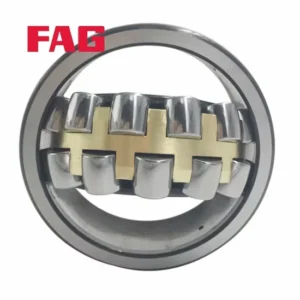
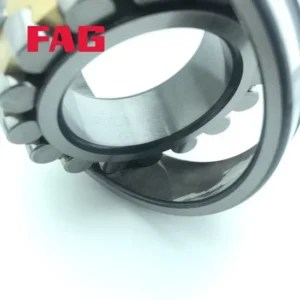
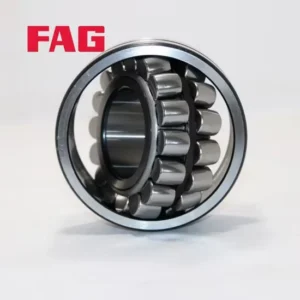

Product details
Description and application notes
Scan To Verify — Authenticate your FAG 22215-E1-K spherical roller bearing instantly using the manufacturer's official app QR code before installation.
Technical Specifications
| Parameter | Value |
|---|---|
| Designation | 22215-E1-K |
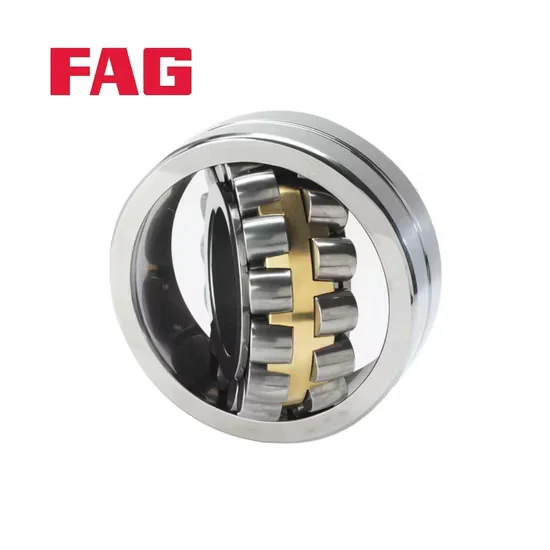
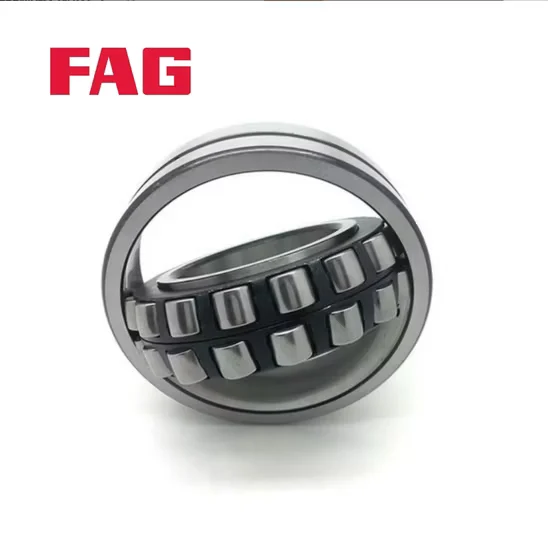
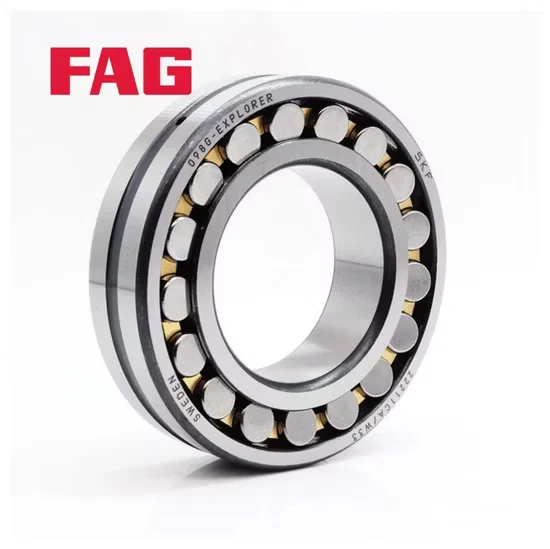
| Bearing Type | Spherical Roller Bearing |
| Structure | Double Row, Self-Aligning |
| Main Material | Chrome Steel Gcr15 |
| Bore Type | Tapered Bore (1:12) |
| Origin | Jiangsu China |
Note: The E1 suffix is unverified and requires manufacturer catalog confirmation.
Application Suitability
| Industry | Typical Applications |
|---|---|
| Mining & Aggregates | Vibrating screen exciter mechanisms, jaw crusher eccentric shafts |
| Pulp & Paper | Paper machine dryer section felt rolls |
| Metallurgy | Steel mill continuous caster guide rolls |
Why Misinterpreting the K Suffix Destroys FAG 22215-E1-K spherical roller bearing Life
A mismatched adapter sleeve or incorrect drive-in distance eliminates the designed internal clearance.
I have seen too many maintenance crews treat a tapered bore as a simple press-fit, ignoring the precise interference required. When the inner ring expands too much during mounting, the rolling elements bind under heavy radial loads. This directly leads to catastrophic cage failure within weeks. Many plant managers underestimate how quickly a slightly preloaded bearing degrades under continuous operation. The thermal expansion generated by heavy friction further exacerbates the issue, turning a minor clearance oversight into a complete seizure. Proper mounting procedures are not just recommendations; they are absolute necessities for survival in harsh environments.
Matching the Tapered Bore to Heavy Shock Loads
In vibrating screens and crushers, equipment faces relentless shock loads that demand secure shaft seating. The FAG 22215-E1-K spherical roller bearing utilizes a 1:12 tapered bore to lock tightly onto the shaft via an adapter sleeve, preventing inner ring creep. This mechanical locking mechanism is vastly superior to standard cylindrical fits when dealing with high-frequency vibrations. Our engineering team ensures you receive the exact matching sleeve dimensions to maintain optimal interference during high-vibration operation, effectively eliminating the micro-movements that cause shaft fretting and eventual structural fatigue.
Managing Thermal Expansion and Misalignment in Harsh Environments
Heavy-duty machinery often operates with significant shaft deflection and elevated ambient heat. The double-row self-aligning structure inherently compensates for angular misalignment, protecting the raceways from edge loading. However, thermal expansion from friction and environmental heat demands careful clearance selection to prevent internal binding. If the operational temperature rises significantly, the inner ring expands faster than the outer ring, rapidly consuming the available internal clearance. Neglecting these thermal dynamics is a primary reason why bearings fail long before their calculated fatigue life. Proper lubrication routing is equally critical to flush out abrasive dust common in mining applications, ensuring the rolling surfaces remain protected from particulate contamination.
Decoding the Designation and Internal Geometry
The "K" suffix definitively indicates a 1:12 tapered bore, requiring precise calculation of the drive-in distance to achieve the correct residual radial clearance after mounting. The double-row self-aligning geometry distributes heavy radial loads evenly across the barrel-shaped rollers, while the chrome steel construction provides the necessary core hardness to resist surface fatigue under continuous stress. This specific internal geometry allows the bearing to accommodate moderate axial loads in both directions, making it highly versatile for complex load profiles encountered in heavy industrial machinery.
The Financial Toll of Incorrect Clearance and Bore Selection
Specifying a standard cylindrical bore instead of a tapered variant in high-vibration equipment inevitably causes inner ring fretting and shaft damage. Furthermore, failing to account for the required clearance reduction during adapter sleeve tightening results in excessive preload. This generates rapid heat buildup and unplanned downtime, voiding equipment warranties and causing catastrophic damage to the surrounding housing. The financial toll extends far beyond the cost of a replacement bearing, encompassing lost production hours, emergency freight charges, and the labor required to repair damaged shaft journals.
Securing Authentic Components for Critical Machinery
Sourcing genuine parts is critical, as counterfeit bearings often lack the precise metallurgical consistency needed for heavy shock loads. We supply fully traceable FAG 22215-E1-K spherical roller bearing units with complete batch documentation, ensuring the chrome steel meets original specifications. Our cross-brand equivalent consultation helps you verify the exact adapter sleeve compatibility, while our global shipping consolidation ensures your maintenance inventory arrives without typical multi-week lead times. We also provide detailed failure analysis support if you are replacing a prematurely failed unit from another source. By strictly controlling the supply chain, we eliminate the risk of receiving substandard components that could compromise the integrity of your most critical production assets.
Documentation & Authenticity
- Certificate of Conformity confirming the exact FAG 22215-E1-K designation and batch number.
- Original factory batch traceability linking the bearing to its specific production run.
- Official app QR verification for instant authenticity checks before unboxing.
- Material inspection reports validating the chrome steel composition and heat treatment.
- Dimensional inspection reports verifying the 1:12 tapered bore tolerance.
Storage, Handling & Mounting
- Keep the FAG 22215-E1-K spherical roller bearing in its original packaging to protect the tapered bore from ambient humidity.
- Use clean gloves during handling to prevent moisture transfer onto the chrome steel raceways.
- Calculate the exact drive-in distance for the adapter sleeve to preserve the required residual clearance.
- Apply the recommended lubricant immediately after mounting to protect the self-aligning rollers from initial dry start-up.
- Store away from direct sunlight and extreme temperature fluctuations to prevent condensation inside the wrapper.
Technical Review and Selection Support
To ensure optimal performance, please share your specific radial and axial load calculations, operating speeds, and ambient temperature ranges. Providing the exact OEM equipment model number allows our engineering team to perform a precise cross-reference check and verify the correct adapter sleeve pairing. We will then calculate the theoretical L10 life and confirm the internal clearance requirements for your specific application. This collaborative technical review ensures that every operational variable is accounted for, transforming a standard procurement process into a comprehensive reliability engineering exercise.
Frequently Asked Questions
Q: How do I verify the authenticity of the FAG 22215-E1-K spherical roller bearing?
A: You can authenticate the bearing by scanning the QR code on the packaging using the manufacturer's official mobile application. This instantly links the physical product to the original factory production batch, confirming its genuine origin and providing access to the digital certificate of conformity.
Q: What does the K suffix mean for mounting this spherical roller bearing?
A: The K suffix designates a 1:12 tapered bore, meaning the bearing must be mounted on a matching tapered journal or an adapter sleeve. This requires calculating the precise drive-in distance to reduce the internal clearance to the optimal operational level, preventing both loose fitting and excessive preload.
Q: How do I select the appropriate internal clearance for vibrating equipment?
A: Vibrating screens and crushers generate significant heat and shaft deflection, typically requiring a larger internal clearance class to prevent binding. You must account for the interference fit from the adapter sleeve and the thermal expansion during operation to ensure the residual clearance remains positive under maximum load conditions.
Q: What are the cross-reference precautions for this specific designation?
A: When cross-referencing to other brands, you must ensure the equivalent model matches not only the basic dimensions but also the 1:12 tapered bore and the specific internal clearance class. Failing to align these exact suffix parameters can lead to improper adapter sleeve fitment and premature failure under heavy loads.