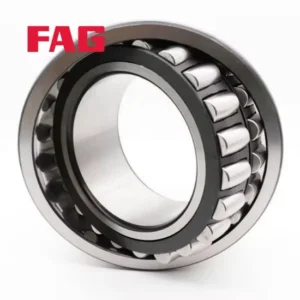


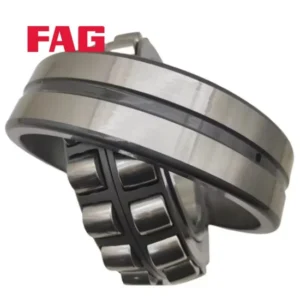
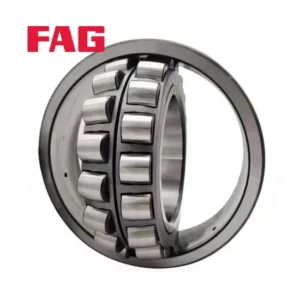
Product details
Description and application notes
Authentic FAG Verification — Every FAG 22344-E1-K spherical roller bearing shipped includes a scannable QR code linked to the official manufacturer app for immediate origin validation.
Technical Specifications
| Parameter | Value |
|---|---|
| Designation | FAG 22344-E1-K |
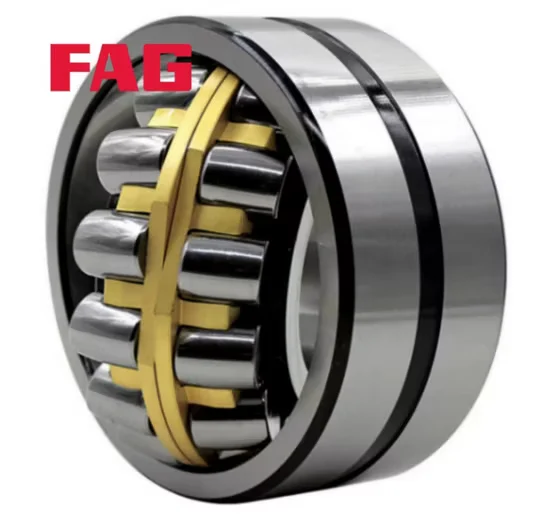
| Bearing Type | Spherical Roller Bearing |
| Structure | Double Row, Self-Aligning |
| Bore Type | 1:12 Tapered Bore (K suffix) |
| Main Material | Chrome Steel Gcr15 |
| Origin | Jiangsu China |
Note: E1 is an unverified suffix requiring manufacturer catalog confirmation.
Application Suitability
| Industry | Typical Applications |
|---|---|
| Mining & Construction | Vibrating screens, Crushers, Heavy-duty excavators |
| Metallurgy & Steel | Steel mill equipment, Rolling mill stands |
| Pulp & Paper | Paper machines, Press section rolls |
Why Misinterpreting Tapered Bore Suffixes Destroys Heavy Machinery
When sourcing a FAG 22344-E1-K spherical roller bearing, overlooking the precise interference fit requirements can lead to catastrophic inner ring cracking under extreme operational stress.
Accurate suffix decoding prevents destructive mounting forces and ensures optimal radial internal clearance under heavy radial loads.
I still vividly remember the disastrous scene at a steel plant years ago when a misidentified clearance class caused a massive mill stand to seize completely. The thermal expansion locked the rollers tight, tearing up the housing and halting production for days. That specific failure mode remains a highly costly nightmare for maintenance teams dealing with heavy vibrating equipment. Overlooking the exact suffix configuration means risking the exact same catastrophic mechanical breakdown in your own facility.
Matching the Tapered Bore Design to High-Vibration Environments
The FAG 22344-E1-K spherical roller bearing utilizes a 1:12 tapered bore to achieve a tight, secure interference fit on tapered journals, which is absolutely critical for vibrating screens and heavy-duty crushers. By locking the inner ring firmly against the shaft, it effectively prevents the micro-movements that cause severe fretting corrosion over time. Our comprehensive cross-brand equivalent model consultation ensures you get the exact mounting dimensions needed for your specific heavy-equipment shafts, preventing unexpected downtime during scheduled maintenance windows.
Managing Extreme Radial Loads and Misalignment in Mining Operations
Mining machinery and steel mill equipment routinely subject these rotating components to severe combined loads and constant shaft deflections. The inherent self-aligning capability effectively compensates for housing misalignment, preventing destructive edge loading on the individual rollers. At elevated temperatures, the internal clearance must adequately accommodate thermal expansion to avoid dangerous preload buildup. Proper relubrication intervals are equally vital to flush out abrasive dust and maintain the protective oil film across the raceways.
Decoding the K Suffix and Internal Geometry for Maximum Durability
The K suffix explicitly denotes a 1:12 tapered bore, demanding precise mounting procedures using hydraulic nuts to achieve the correct drive-up distance and residual clearance. Unlike standard cylindrical bores, this specialized tapered design allows for fine-tuning of the radial internal clearance during installation, which is essential for high-load vibrating applications. The double-row, self-aligning structure inherently manages moderate angular misalignment without inducing destructive edge stresses on the roller ends. Furthermore, the main material, Chrome Steel Gcr15, provides the necessary core hardness and fatigue resistance for continuous heavy-duty operation. Selecting the correct clearance class alongside this tapered bore ensures the bearing operates within its optimal load zone once securely mounted on the journal.
The Financial Impact of Incorrect Bore and Clearance Selection
Specifying a standard cylindrical bore instead of a tapered one for a tapered journal inevitably leads to severe fretting and rapid shaft wear. Conversely, failing to adjust the clearance properly during the mounting process results in excessive preload, generating abnormal heat and premature fatigue spalling. According to established failure analysis frameworks, incorrect mounting practices account for a significant share of early-life failures in heavy industry. These preventable mistakes inevitably trigger unplanned downtime and catastrophic damage to adjacent drivetrain components, drastically inflating your total operational costs.
Securing Authentic Components for Critical Mill Stands and Crushers
Sourcing genuine bearings requires strict attention to suffix accuracy, especially when distinguishing between standard and specialized clearance classes for tapered bore models. We provide complete traceability documentation for every single unit, ensuring the exact internal geometry perfectly matches your demanding mill stand requirements. Our massive spot inventory covers thousands of standard part numbers, eliminating typical multi-week lead times for urgent maintenance replacements. Additionally, our technical selection support helps verify the precise drive-up distance and residual clearance needed for your specific shaft journals. We also offer global shipping consolidation to efficiently coordinate your mixed-brand project orders across multiple international sites.
Documentation & Authenticity
- Certificate of Conformity verifying the exact 1:12 tapered bore geometry and material grade.
- Original batch traceability linking the specific heat number to the manufacturer's production facilities.
- Official app QR code validation confirming the authentic origin of the double-row self-aligning design.
- Dimensional inspection reports confirming the precise bore taper angle before dispatch.
- Material test certificates validating the Chrome Steel Gcr15 core hardness and fatigue limits.
Storage, Handling & Mounting
- Store the tapered bore units in original packaging to protect the precision-machined 1:12 inner ring surface from humidity.
- Use clean gloves when handling the exposed Chrome Steel Gcr15 rollers to prevent acidic sweat corrosion.
- Mount using hydraulic nuts to accurately measure the drive-up distance and verify residual internal clearance.
- Keep the self-aligning bearing sealed until installation to prevent abrasive mining dust from contaminating the raceways.
- Support the heavy double-row assembly with proper lifting slings to avoid damaging the outer ring during hoisting.
Preparing Your Technical Data for Precise Procurement and Validation
To ensure precise technical verification, please share your detailed operating parameters including radial and axial loads, rotational speed, and ambient temperature. Providing the exact OEM equipment number or shaft journal dimensions allows our engineering team to confirm the required drive-up distance and residual clearance. This critical data enables us to perform a comprehensive L10 life calculation and cross-reference validation for your specific heavy-duty application, ensuring the selected component delivers maximum service life under your exact operating conditions.
Frequently Asked Questions
Q: How do you verify the authenticity of the FAG 22344-E1-K spherical roller bearing?
A: We supply original batch traceability documentation and a scannable QR code linked to the official manufacturer app. This allows your maintenance team to instantly validate the authentic origin, material grade, and production facility data, completely eliminating the risk of counterfeit components entering your critical steel mill or mining equipment.
Q: What does the K suffix indicate for this specific tapered bore design?
A: The K suffix specifies a 1:12 tapered bore, which requires mounting on a matching tapered journal or adapter sleeve. This design allows maintenance crews to precisely control the radial internal clearance during installation using hydraulic nuts, ensuring optimal load distribution and preventing premature failure in high-vibration crushers and screens.
Q: How do we determine the correct drive-up distance for the tapered bore?
A: Calculating the exact drive-up distance requires knowing the shaft taper angle, the target residual clearance, and the specific mounting method used. Our technical team provides precise calculation sheets based on your operational parameters, ensuring the inner ring is expanded correctly to achieve the optimal interference fit without risking structural damage.
Q: How should we determine the correct residual clearance during mounting?
A: Determining the correct residual clearance involves calculating the required drive-up distance based on the shaft taper angle and the target operating temperature. Our technical selection support team helps you compute these exact values using your specific radial loads and speed parameters, ensuring the bearing operates within its optimal load zone.
Q: Can you cross-reference this model with other premium global brands?
A: Yes, our cross-brand equivalent model consultation service maps this specific double-row, self-aligning design to corresponding SKF, NSK, or NTN equivalents. We verify the identical 1:12 tapered bore dimensions, load ratings, and clearance classes to ensure smooth interchangeability for your urgent MRO replacement scenarios without compromising equipment reliability.