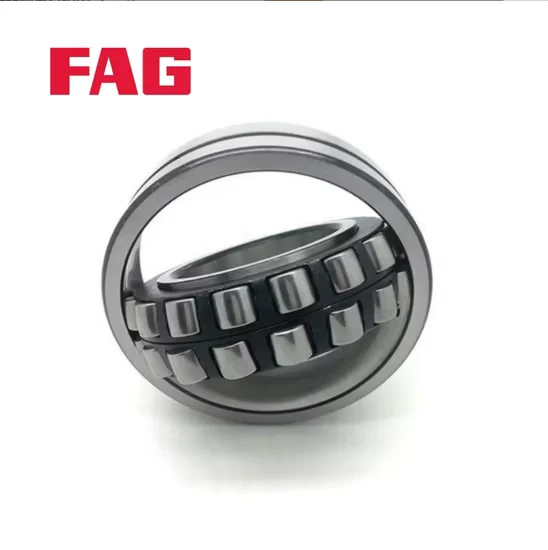



Product details
Description and application notes
Mixed-Brand Sourcing Consolidation — We coordinate multi-brand project shipments so you avoid juggling separate logistics for FAG, SKF, or Timken components.
Technical Specifications
| Parameter | Value |
|---|---|
| Designation | FAG 23064-K-MB-C3 |
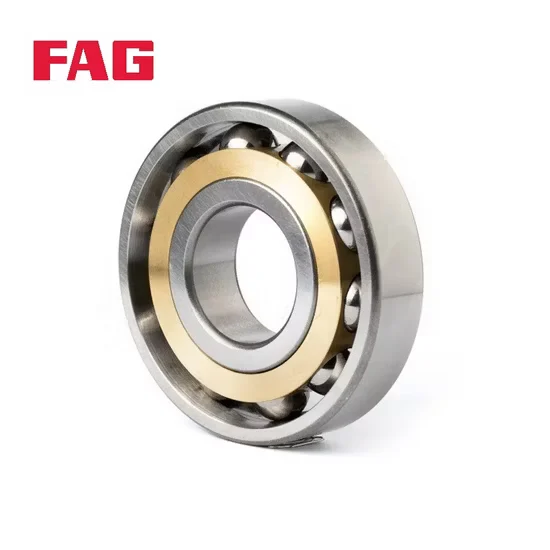
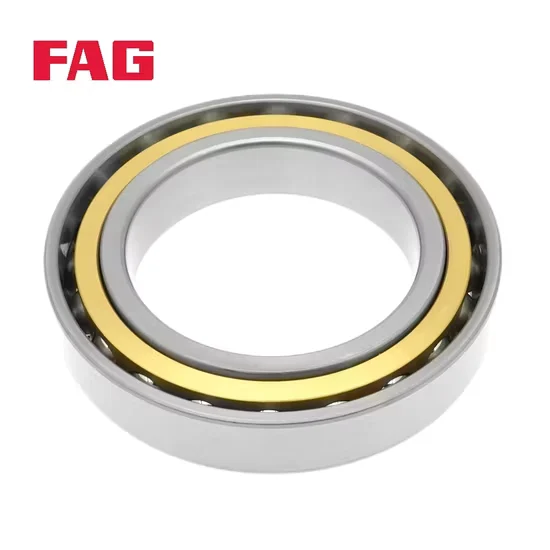
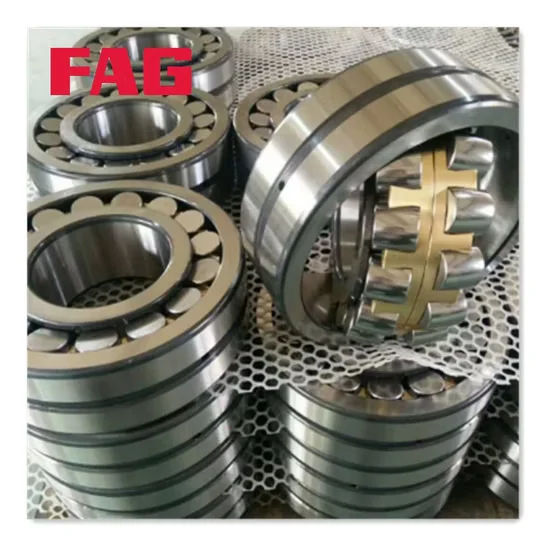
| Bearing Type | Spherical Roller Bearing |
| Arrangement | Double Row, Self-Aligning |
| Bore Type | 1:12 Tapered Bore (K suffix) |
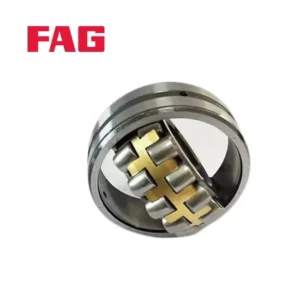
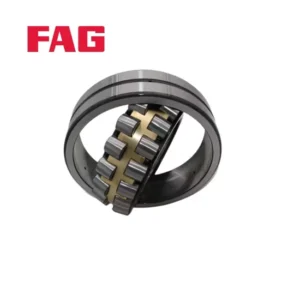
| Cage Material | Brass, Inner Ring Guided (MB suffix) |
| Clearance Class | Radial Internal Clearance C3 |
| Material | Chrome Steel Gcr15 |
| Seal or Shield Type | Open |
Application Suitability
| Industry | Typical Applications |
|---|---|
| Steel Mills | Continuous casting machine segments, roll guide assemblies |
| Mining & Aggregates | Vibrating screen exciter mechanisms, primary jaw crusher eccentric shafts |
| Pulp & Paper | Paper machine dryer cylinder bearings, press roll journal supports |
Thermal Expansion Traps in FAG 23064-K-MB-C3 spherical roller bearing Applications
Ignoring clearance suffixes turns standard replacements into production-stopping liabilities.
When sourcing a FAG 23064-K-MB-C3 spherical roller bearing for high-heat environments, overlooking the C3 designation leads to rapid thermal expansion and catastrophic raceway seizure. In continuous casting operations, standard clearance simply cannot accommodate the extreme temperature gradients. The inner ring expands directly into the rolling elements, eliminating the operational gap and causing unplanned downtime that far exceeds the initial component cost. This specific failure mode remains a persistent challenge in metallurgy, where ambient heat continuously transfers into the bearing core and degrades the lubricant film.
Aligning the FAG 23064-K-MB-C3 spherical roller bearing with Steel Mill Demands
Heavy metallurgy environments demand components that tolerate severe misalignment and continuous shock loading. The FAG 23064-K-MB-C3 spherical roller bearing addresses these exact challenges through its self-aligning geometry and durable brass cage. Our engineering team frequently maps these specific suffix combinations to OEM equipment lists, ensuring the replacement matches the original thermal and mechanical design intent. By strictly validating the application parameters, we prevent the costly trial-and-error approach that often plagues emergency maintenance replacements in demanding steel mill environments, securing long-term operational stability.
Managing Heat, Vibration, and Contamination
Continuous casting and crushing operations subject bearings to intense radial loads combined with heavy vibration and elevated ambient heat. Standard grease formulations degrade rapidly under these extreme conditions, making the open design absolutely essential for continuous external relubrication to flush out abrasive metallic dust. Furthermore, the inner-ring guided brass cage maintains critical structural stability when the equipment experiences sudden shock loads or minor shaft deflections during operation. Ignoring these environmental factors inevitably accelerates wear and compromises the overall service life of the assembly.
Decoding the K, MB, and C3 Suffixes
The K suffix indicates a 1:12 tapered bore, requiring precise drive-up measurements on adapter sleeves to achieve the correct residual internal clearance during installation. The MB designation specifies a solid brass cage guided on the inner ring, which provides superior durability and resistance to cage fatigue under heavy vibration compared to pressed steel alternatives. Finally, the C3 radial internal clearance is critical; it provides the necessary operational gap to compensate for thermal expansion and tight interference fits. This specific clearance class prevents the inner ring from expanding into the rolling elements during high-temperature operation, ensuring smooth rotation under severe thermal gradients and heavy loads.
The Financial Impact of Incorrect Clearance Selection
Substituting a standard clearance bearing in a high-temperature application inevitably results in premature failure and catastrophic damage to the surrounding shaft and housing structures. According to established failure analysis frameworks, thermal seizure accounts for a significant share of premature bearing failures in heavy metallurgy applications. This not only voids the manufacturer warranty but also triggers extended line stoppages. Ultimately, it turns a minor procurement oversight into a massive operational deficit that disrupts the entire production schedule and severely compromises output targets.
Securing Traceable Replacements for Critical Assets
We maintain massive spot inventory covering thousands of standard and special part numbers, ensuring rapid dispatch for urgent maintenance requirements across global facilities. For this specific model, our technical selection support strictly verifies the C3 clearance and MB cage suffixes against your OEM documentation to prevent the exact misapplication issues I witnessed firsthand in Riyadh steel plants. Additionally, our cross-brand equivalent model consultation ensures that if primary lead times fluctuate, we can source dimensionally and functionally identical alternatives without compromising the tapered bore or clearance specifications. This comprehensive approach guarantees that your critical assets remain operational without extended procurement delays or unexpected performance drops.
Documentation & Authenticity
- Certificate of Conformity verifying the C3 radial clearance and MB brass cage specifications.
- Original batch traceability documents linking the bearing to the manufacturer's production facilities.
- Official app QR code validation for immediate on-site authenticity verification upon delivery.
- Material inspection reports confirming Gcr15 chrome steel composition and heat treatment standards.
- Dimensional inspection reports validating the 1:12 tapered bore geometry and self-aligning tolerances.
Storage, Handling & Mounting
- Store the tapered bore bearing in its original packaging to protect the K-bore surface from humidity and corrosion.
- Use clean gloves when handling the MB brass cage to prevent acidic sweat from initiating surface oxidation.
- Calculate the exact drive-up distance on the adapter sleeve to maintain the specified C3 residual clearance.
- Apply induction heating strictly within thermal limits to avoid altering the Gcr15 chrome steel metallurgy.
- Keep the open bearing sealed until mounting to prevent abrasive dust from embedding before initial lubrication.
Preparing Your Inquiry for Technical Validation
To ensure precise application matching, please share your operational parameters including radial and axial loads, rotational speed, and ambient temperature ranges for accurate L10 life recalculation. Providing the exact OEM equipment number or existing housing dimensions allows our engineering team to verify the cross-reference equivalents and confirm the tapered bore fitment. Detailing the specific contamination level and relubrication intervals helps us validate that the open design and brass cage configuration fully support your maintenance schedule. Supplying these technical details ultimately delivers a reliable and technically sound sourcing solution for your facility, minimizing future operational risks.
Frequently Asked Questions
Q: How to verify the authenticity of FAG 23064-K-MB-C3 bearings upon delivery?
A: Upon delivery, inspect the packaging for intact security seals and scan the QR code using the official manufacturer authentication app. Cross-check the physical laser markings on the outer ring against the provided Certificate of Conformity, specifically verifying the K, MB, and C3 suffixes to ensure no unauthorized substitutions occurred during transit.
Q: What are the cross-reference precautions regarding clearance and cage material alignment?
A: When evaluating cross-reference equivalents, you must strictly align the C3 radial clearance and the inner-ring guided brass cage specifications. Substituting a pressed steel cage or standard clearance alternative will drastically reduce vibration resistance and thermal tolerance, leading to rapid failure in heavy-duty applications like vibrating screens or continuous casters.
Q: How does C3 clearance differ from CN, and when is it required for spherical roller bearings?
A: C3 clearance provides a larger internal operational gap than standard CN clearance. It is strictly required in applications involving high ambient temperatures, significant thermal gradients, or tight interference fits on the shaft. This extra gap compensates for thermal expansion, preventing the bearing from seizing under operational heat.
Q: What are the specific mounting tools and induction heating requirements for tapered bore (K) bearings?
A: Mounting a K-suffix tapered bore bearing requires a hydraulic nut or precise locknut tightening to achieve the correct drive-up distance on the adapter sleeve. Induction heating should only be used for the inner ring, strictly controlling the temperature to preserve the chrome steel hardness while expanding the bore for smooth installation.
Q: How to determine the correct re-lubrication intervals for brass-caged spherical roller bearings in crushers?
A: Re-lubrication intervals depend on the crusher vibration intensity, ambient dust levels, and operating temperatures. Since this is an open bearing, regular grease purging is essential to flush out contaminated lubricant and abrasive particles. We recommend calculating the interval based on actual field operating hours rather than standard catalog estimates.