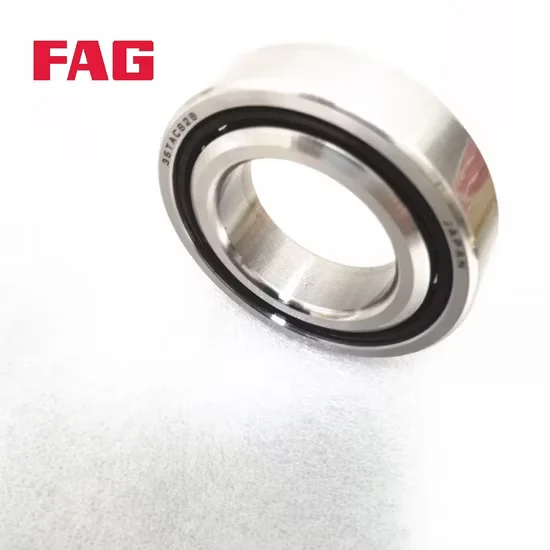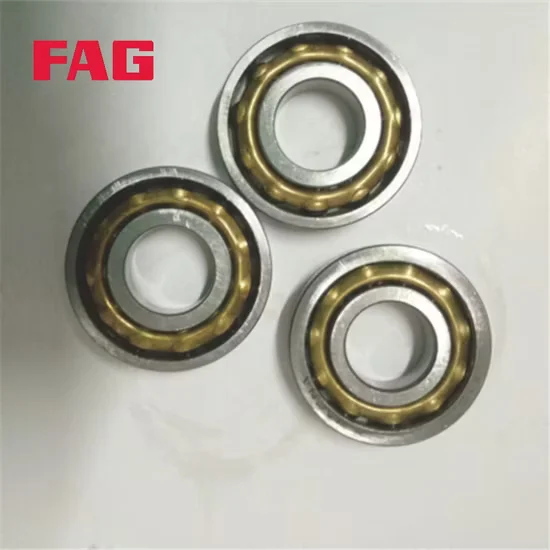
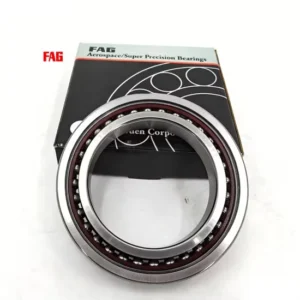
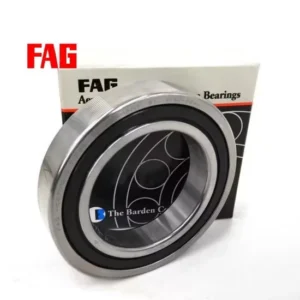
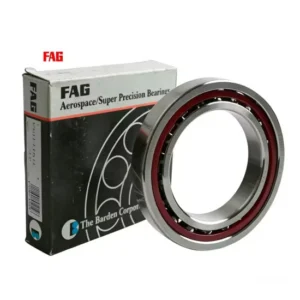
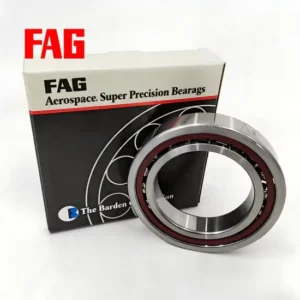
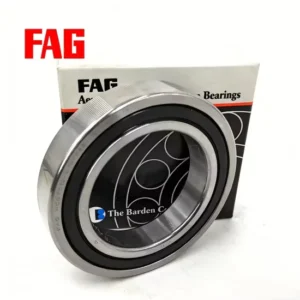
Product details
Description and application notes
Full-Brand Sourcing Consolidation — Procure this spindle bearing alongside your entire SKF or NSK maintenance list through a single unified shipment, eliminating multi-vendor coordination.
Technical Specifications
| Parameter | Value |
|---|---|
| Designation | FAG B71911-E-T-P4s-Um |
| Bearing Type | Angular Contact Ball Bearing |
| Bore Diameter (d) | 55 mm |
| Outside Diameter (D) | 80 mm |
| Width (B) | 13 mm |
| Precision Class | P4s |
| Contact Angle | 25° |
| Material | Bearing Steel |
| Origin | Jiangsu, China |
Application Suitability
| Industry | Typical Applications |
|---|---|
| Machine Tool Manufacturing | High-speed milling spindle front and rear support |
| Precision Engineering | Coordinate measuring machine rotary axes |
| Industrial Automation | High-speed pump drive shafts |
Why Standard Tolerances Destroy High-Speed Spindles Using the FAG B71911-E-T-P4s-Um angular contact ball bearing
Micro-vibrations at extreme RPM turn minor dimensional deviations into catastrophic thermal runaway.
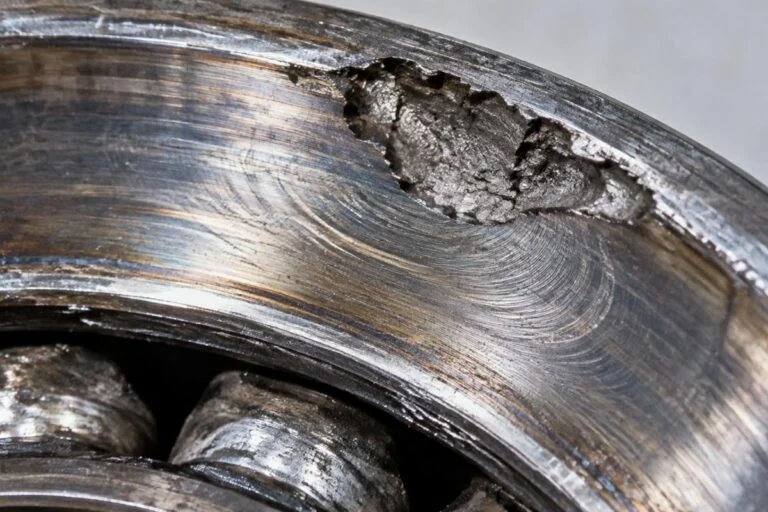
When upgrading legacy machinery, I once tore down a seized machining center spindle where a standard P5 bearing was forced into a P4s housing. The resulting friction generated enough heat to weld the rolling elements to the raceway, completely destroying the shaft. When sourcing a FAG B71911-E-T-P4s-Um angular contact ball bearing, skipping the super-precision tier to save a few dollars guarantees unplanned downtime, scrapped workpieces, and severe secondary damage to the spindle housing.
Matching P4s Accuracy to Demanding Machining Environments
When upgrading a legacy CNC lathe, the FAG B71911-E-T-P4s-Um angular contact ball bearing provides the exact dimensional stability required for heavy interrupted cuts. Our engineering team frequently cross-references this specific designation against equivalent spindle models to ensure your retrofit maintains the original equipment manufacturer's rigidity specifications without requiring housing modifications.
Navigating Thermal Expansion and Lubrication Starvation
Spindle applications subject these components to extreme centrifugal forces and combined radial-axial loads during heavy milling operations. As rotational speeds climb, internal friction elevates operating temperatures, which can dangerously reduce internal clearance if the initial preload is miscalculated by the assembly technician. Proper oil-air or grease lubrication is absolutely critical to prevent cage wear, while the open design necessitates meticulous sealing at the housing level to block coolant ingress and metallic debris from entering the raceway.
Decoding the B719 Series Engineering Details
The B719 series represents a specific cross-section optimized for high rigidity in compact spindle noses, balancing load capacity with speed limits. The 'E' suffix confirms a 25° contact angle, striking the ideal balance between axial thrust capacity from tool engagement and radial support for the shaft. Achieving P4s precision ensures the inner and outer ring tolerances are tightly controlled, minimizing runout that would otherwise ruin surface finishes on milled parts. The standard bearing steel construction provides excellent load capacity, while ceramic hybrid variants are available for applications requiring higher speeds and reduced thermal expansion. Selecting the correct cage material is equally vital for maintaining stability under high-speed vibration.
The Financial Impact of Compromised Spindle Precision
Installing a lower-grade alternative in a high-frequency milling head inevitably leads to premature fatigue and severe chatter marks on finished aerospace parts. According to ISO 15243 failure classification frameworks, improper clearance selection often manifests as smearing on the raceways, completely voiding the machine tool warranty and requiring a full spindle rebuild. The resulting unplanned downtime, lost production shifts, and emergency air-freight costs for replacement parts drastically outweigh any initial savings on the component itself, turning a minor purchasing decision into a massive financial liability.
Securing Authentic Super-Precision Components
Counterfeit spindle bearings frequently flood the secondary market, often failing within weeks due to substandard steel metallurgy and incorrect heat treatment. We supply genuine inventory with complete batch traceability, ensuring the P4s tolerances exactly match the factory test certificates provided at the time of shipment. Because we consolidate mixed-brand MRO orders, you can easily add this precise unit to a broader container shipment of standard deep-groove or spherical roller bearings for your general maintenance needs. Our flexible minimum order quantities mean you can secure a single emergency replacement for a downed CNC machine without waiting for full-pallet minimums, keeping your production lines running smoothly.
Documentation & Authenticity
- Original factory batch traceability linking the P4s inspection report to the specific production run.
- Official manufacturer app QR code validation to confirm the B719 series authenticity before unboxing.
- Dimensional and running accuracy certificates verifying the 25° contact angle and super-precision tolerances.
- Material inspection reports confirming the metallurgical grade of the bearing steel or available ceramic variants.
Storage, Handling & Mounting
- Keep the factory-sealed anti-corrosion wrapping intact until the exact moment of spindle assembly to protect the P4s machined surfaces.
- Use lint-free cleanroom gloves when handling the open bearing to prevent microscopic skin oils from degrading the high-speed spindle lubricant.
- Store the component in a climate-controlled environment to prevent thermal shock that could alter the tight B719 series internal clearances.
- Follow the manufacturer's specified heating protocols for the housing, avoiding direct flame contact that would destroy the super-precision raceway geometry.
Preparing Your Technical Parameters for Selection Review
To ensure this exact designation matches your spindle rebuild, please share the operational radial and axial loads, maximum RPM, and the specific oil-air or grease lubrication setup. Providing the original equipment manufacturer's assembly drawing allows our technical team to verify the required preload arrangement and confirm the housing fit tolerances.
Frequently Asked Questions
Q: How do I verify the authenticity of this FAG super precision bearing?
A: You can authenticate the component by scanning the QR code on the packaging using the manufacturer's official mobile application. Additionally, we provide the original factory batch traceability documentation, which allows you to cross-reference the unique serial number with the production facility's quality database to confirm the P4s precision grading.
Q: What does the P4s precision class mean compared to standard P4?
A: The P4s classification denotes a super-precision tier that imposes stricter tolerances on running accuracy and dimensional deviations than a standard P4 grade. This tighter control is essential for machine tool spindles operating at high speeds, as it minimizes radial runout and axial displacement, ensuring superior surface finishes on machined parts and extended operational life.
Q: How should I interpret the unverified suffixes like T and Um?
A: While the 'E' confirms the 25° contact angle and 'P4s' defines the precision class, suffixes like 'T' and 'Um' relate to specific cage materials and preload pairing configurations that require manufacturer catalog confirmation. We recommend consulting our engineering team with your exact spindle model so we can verify these specific design variations against the official technical documentation.
Q: Which lubrication methods are recommended for this 25° angular contact spindle bearing?
A: For high-speed machine tool applications, oil-air lubrication or high-speed spindle grease is typically required to manage thermal generation. Because this is an open design without integrated seals, the spindle housing must provide adequate sealing to prevent coolant contamination while allowing the precise lubricant volume to reach the rolling elements and the cage during operation.