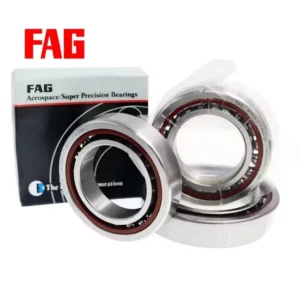
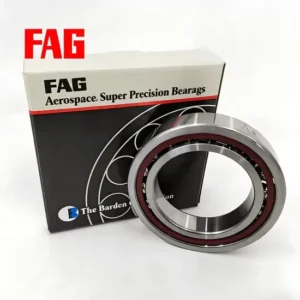
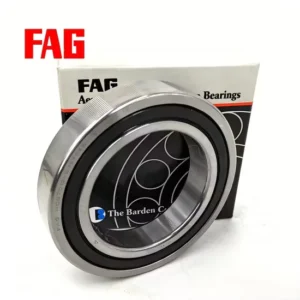
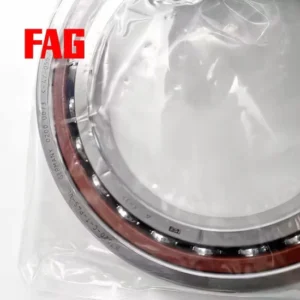

Product details
Description and application notes
Mixed-Brand Sourcing — Consolidate SKF, FAG, and NSK spindle bearings into a single shipment without juggling multiple vendor accounts.
Technical Specifications
| Parameter | Value |
|---|---|
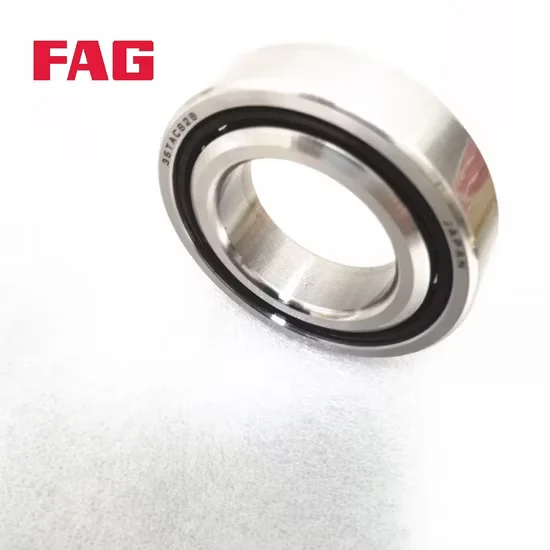
| Designation | FAG B7207-E-T-P4s-UL |
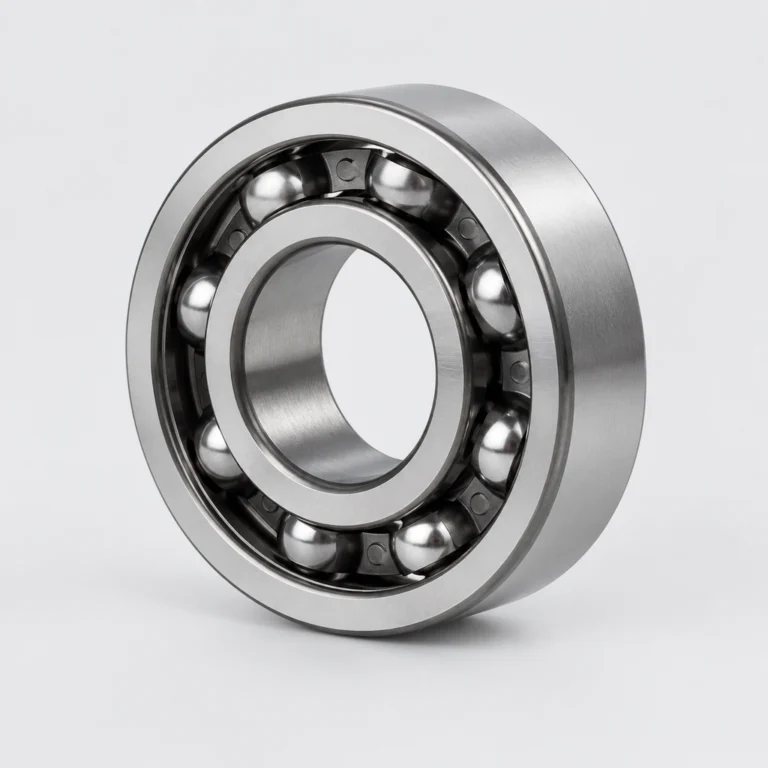
| Bearing Type | Angular Contact Ball Bearing |
| Bore Diameter (d) | 35 mm |
| Outside Diameter (D) | 72 mm |
| Width (B) | 17 mm |
| Contact Angle | 25° (E suffix) |
| Precision Class | P4s (ISO) |
| Cage Material | Unverified specification* |
| Arrangement | Unverified specification* |
| Material | Bearing steel |
*Suffixes T and UL require manufacturer catalog confirmation for exact cage material and preload specifications.
Application Suitability
| Industry | Typical Applications |
|---|---|
| Machine Tool Manufacturing | High-speed milling and grinding spindle assemblies |
| Precision Engineering | Robotics joint actuators and rotary tables |
| Industrial Pumps | High-speed centrifugal pump shaft supports |
Why Spindle Vibration Ruins Perfectly Good FAG B7207-E-T-P4s-UL Angular Contact Ball Bearings
Microscopic mounting errors and ignored preload specifications destroy precision before the first cut.
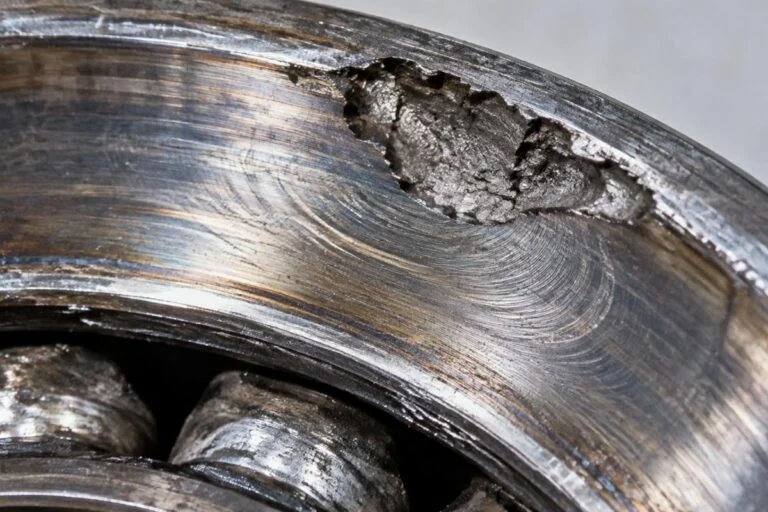
Years ago, I sourced basic B7207 models for a Dubai machine tool plant, completely overlooking the critical P4s precision and pairing suffixes. The bearings were shipped to Riyadh, installed, and the spindle vibration exceeded limits, resulting in immediate scrap. The financial loss from a single scrapped spindle assembly far outweighs the initial cost of the components, making strict adherence to the full designation absolutely critical for any technical buyer.. Today, when handling FAG precision components, every single suffix must be scrutinized because missing one letter changes the entire assembly behavior and compromises the geometric integrity of the machined parts.
Matching the FAG B7207-E-T-P4s-UL to High-Speed Spindle Demands
The FAG B7207-E-T-P4s-UL angular contact ball bearing is engineered specifically for the rigorous demands of high-speed spindle assemblies. Its 25° contact angle provides an ideal balance between axial rigidity and radial load capacity, ensuring the cutting tool maintains strict tolerances during heavy milling operations. We frequently cross-reference these specific dimensional requirements against mixed-brand project orders to ensure smooth integration into existing machine tool architectures. When upgrading older equipment, confirming the exact housing dimensions and shaft tolerances prevents the axial play that typically causes chatter marks on the finished workpiece.
Managing Thermal Expansion and Lubrication in Precision Spindles
Spindle environments generate intense localized heat, which directly impacts internal clearance and lubrication film thickness. If the grease degrades or the oil-air mixture fails, the resulting friction rapidly raises the operating temperature beyond the thermal limit of standard bearing steel.. Proper selection of the contact angle and precision class ensures the bearing accommodates these thermal shifts without binding or losing rotational accuracy. Furthermore, maintaining the correct oil-air flow rate is essential to flush out microscopic wear particles that could otherwise score the precision raceways and degrade the P4s running accuracy over time.
Decoding the P4s Precision and 25° Contact Angle
The P4s precision class dictates extremely tight dimensional and running accuracy, which is non-negotiable for minimizing runout in high-speed spindles. Unlike standard P4 or P5 grades, P4s ensures the inner and outer rings maintain strict geometric tolerances under dynamic loads, directly influencing the surface finish of the machined component. The 25° contact angle, designated by the E suffix, is the industry standard for spindle applications because it handles combined loads effectively while supporting high rotational speeds. While available in specialized material variants for extreme environments, the standard bearing steel construction provides the necessary structural rigidity to resist deflection during heavy radial cuts. Attempting to substitute a standard angular contact bearing in this application will inevitably lead to chatter marks, accelerated tool wear, and premature failure of the entire spindle cartridge.
The Hidden Financial Drain of Incorrect Suffix Selection
Selecting the wrong preload or ignoring the universal matching configuration leads to catastrophic damage to the spindle housing and costly unplanned downtime. According to ISO 15243 frameworks, improper mounting and incorrect internal clearance are primary drivers of premature failure in precision applications.. A single mismatched bearing in a paired arrangement voids the machine warranty and forces a complete teardown of the spindle unit. The resulting loss of production capacity and the expense of replacing the precision ground shaft often dwarf the initial procurement savings of choosing an unverified alternative.
Securing Authentic Spindle Bearings Through Strict Verification
Sourcing genuine precision components requires more than just matching the basic part number on a purchase order. We verify the exact P4s tolerance and 25° contact angle against original manufacturer inspection reports before dispatch. Our technical team cross-checks unverified suffix codes with official catalogs to confirm the exact cage material and preload specifications, preventing the exact mismatch that ruined my early Dubai procurement. We provide complete traceability documentation for every batch, ensuring the bearings meet ISO-compliant quality assurance standards. This rigorous validation protects your spindle assemblies from the devastating impact of counterfeit or mislabeled parts that frequently circulate in the industrial maintenance market, guaranteeing that your machine tool maintains its designed geometric accuracy.
Documentation & Authenticity
- Certificate of Conformity verifying the P4s precision class and dimensional tolerances.
- Original manufacturer batch traceability records linking the bearing to its specific production run.
- Dimensional and running accuracy inspection reports confirming strict ISO geometric tolerances.
- Official anti-counterfeiting labels and QR codes for immediate authenticity verification via the manufacturer app.
Storage, Handling & Mounting
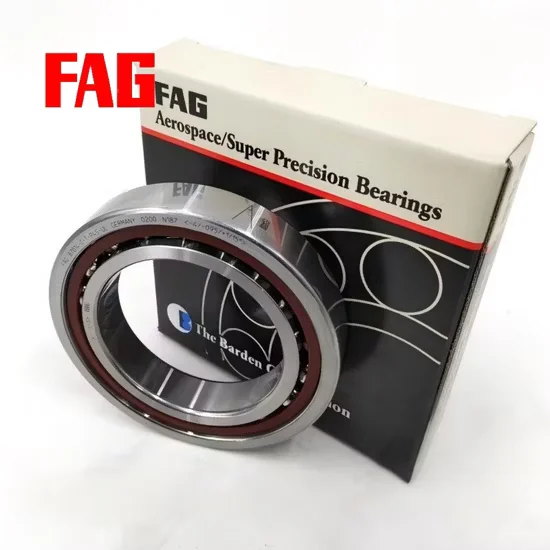
- Keep the universal matched set sealed in its original packaging until the exact moment of mounting to preserve factory preload marks.
- Use clean, lint-free gloves when handling the P4s precision rings to prevent microscopic corrosion from skin moisture.
- Apply induction heating strictly to the inner ring only, avoiding thermal damage to the cage and rolling elements.
- Verify the 25° contact angle orientation marks before pressing the outer ring into the spindle housing to prevent axial binding.
Engineering Support for Spindle Integration
To ensure optimal performance, please share your specific radial and axial load profiles, maximum operating speeds, and spindle housing dimensions. Our engineering team will use these parameters to perform a comprehensive L10 life calculation and verify the suitability of the P4s precision class for your specific cutting forces. Providing the original equipment manufacturer part number allows us to execute precise cross-reference checks and confirm the exact preload arrangement required for your assembly. This technical review ensures that the selected configuration perfectly aligns with your operational demands and prevents costly installation errors.
Frequently Asked Questions
Q: How does the P4s precision class differ from standard P4 for this spindle bearing?
A: The P4s class enforces stricter running accuracy and tighter dimensional tolerances than standard P4, specifically targeting the minimal runout required for high-speed machine tool spindles. This ensures superior surface finish quality and extends the operational life of the cutting tool by reducing microscopic vibrations during heavy milling operations.
Q: What do the unverified T and UL suffixes indicate on this model?
A: While the E and P4s suffixes confirm the 25° contact angle and precision class, the T and UL suffixes require manufacturer catalog confirmation. Typically, T denotes a specific cage material and UL indicates universal matching with light preload, but verifying these exact specifications is critical before installation to avoid spindle vibration issues.
Q: How can I verify the authenticity of the FAG bearing before installation?
A: Every genuine unit includes official anti-counterfeiting labels and a unique QR code. You can scan this code using the manufacturer's official mobile application to instantly verify the batch traceability, confirm the P4s precision grade, and ensure the bearing originates from authorized production facilities rather than unauthorized third-party sources.
Q: What cross-reference equivalents exist if this exact model is unavailable?
A: If the specific designation is out of stock, our technical team can identify equivalent high-precision angular contact bearings from other premium global brands like SKF or NSK. We cross-reference the 35mm bore, 72mm outside diameter, 25° contact angle, and P4s precision class to ensure the alternative maintains the required spindle rigidity and speed capabilities.