
Product details
Description and application notes
Cross-Reference Alignment Verified — Every FAG 23056-E1-K-C3 spherical roller bearing shipment includes matched internal clearance, cage design, and dimension reports to prevent mismatched replacements.
Technical Specifications
| Parameter | Value |
|---|---|
| Designation | FAG 23056-E1-K-C3 |
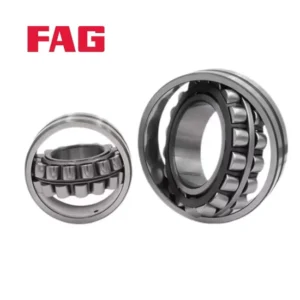
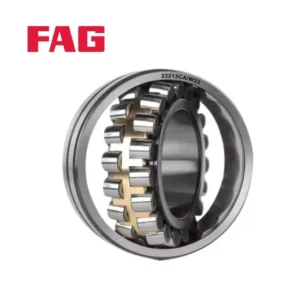
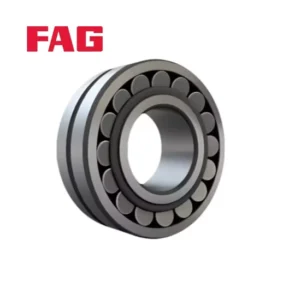
| Bearing Type | Spherical Roller Bearing |
| Structure | Double Row, Self-Aligning |
| Main Material | Chrome Steel Gcr15 |
| Bore Type | 1:12 Tapered Bore |
| Internal Clearance | C3 |
| Origin | Jiangsu China |
Application Suitability
| Industry | Typical Applications |
|---|---|
| Mining & Aggregates | Vibrating screens and rock crushers |
| Metallurgy | Steel mill equipment and continuous casters |
| Pulp & Paper | Paper machines and drying cylinders |
Why Standard Clearance Fails in Heavy-Duty Spherical Roller Bearings
When sourcing a FAG 23056-E1-K-C3 spherical roller bearing, ignoring thermal expansion leads to catastrophic seizures in heavy machinery. Thermal growth in high-heat environments demands greater internal clearance to prevent operational lock-up and protect the raceways. Early in my procurement career, a batch of 23056-E1-K units shipped to a Riyadh cement plant was specified with standard CN clearance. Under extreme Middle Eastern ambient heat and heavy radial loads from the kiln drive, the inner rings expanded rapidly. This eliminated the operational gap, causing sudden downtime and severe shaft scoring. Specifying the C3 variant is the absolute baseline for such demanding thermal profiles, as it accommodates the differential expansion between the rotating shaft and the stationary housing.
Matching Tapered Bore Geometry to Crusher Vibrations
The 1:12 tapered bore design allows secure mounting on adapter sleeves, which is critical for absorbing the severe shock loads found in rock crushers and vibrating screens. This specific FAG 23056-E1-K-C3 spherical roller bearing accommodates shaft deflections and misalignment inherent in heavy-duty material processing equipment. Our engineering team ensures the adapter sleeve thread and locknut match the exact taper ratio to maintain the required clamping force during continuous operation. By precisely matching the mounting components to the bore geometry, we eliminate the risk of inner ring creep, which is a frequent cause of premature shaft wear in high-vibration environments.
Managing Heat, Dust, and Heavy Radial Forces
Steel mill equipment and vibrating screens subject bearings to intense combined loading and abrasive contamination. The double row self-aligning structure manages heavy radial loads while compensating for housing misalignment caused by structural deflection under peak tonnage. Elevated operating temperatures drastically reduce lubricant viscosity and alter the internal geometry, making the C3 clearance essential to accommodate thermal expansion without inducing destructive preload. Furthermore, adequate sealing arrangements and regular re-lubrication intervals are mandatory to flush out metallic debris and prevent premature raceway spalling. Ignoring these environmental factors accelerates fatigue and drastically shortens the service interval.
Decoding the K and C3 Suffixes for Operational Survival
The K suffix designates a 1:12 tapered bore, enabling precise radial internal clearance adjustment during mounting via drive-up methods. The C3 internal clearance provides a larger-than-normal gap between the rolling elements and raceways, which is non-negotiable when the inner ring operates at a significantly higher temperature than the outer housing. Chrome steel Gcr15 material delivers the necessary fatigue resistance to withstand the cyclic Hertzian stresses generated by heavy vibrating machinery. Selecting the correct clearance class directly dictates the operational lifespan under thermal gradients, while the self-aligning capability protects the rolling elements from edge loading when the shaft bends under extreme radial forces.
The Financial Impact of Misaligned Clearance Selection
Installing a standard clearance bearing in a high-temperature application inevitably leads to excessive preload, generating immense friction and rapid heat accumulation. This triggers catastrophic damage to the cage and rolling elements, resulting in unplanned downtime and severe secondary damage to the shaft and housing. According to failure analysis frameworks, a significant share of premature failures stems directly from ignoring the thermal expansion coefficients during the initial selection phase. Replacing a seized unit not only incurs the cost of the new component but also demands extensive labor to machine out damaged shaft journals and repair distorted housing bores.
Securing Traceability and Technical Accuracy
Sourcing genuine components requires more than just matching the part number; it demands verifying the exact suffix configuration to avoid field failures. We cross-check the C3 clearance and K tapered bore against the manufacturer's original production records to prevent costly mismatches that standard catalogs might overlook. Our massive spot inventory covers thousands of standard and special part numbers, enabling full container consolidation for bulk project orders and urgent maintenance shutdowns. We provide complete traceability documentation and long-term after-sales technical support for failure analysis, ensuring your maintenance team has the exact specifications needed for reliable replacements and future procurement planning.
Documentation & Authenticity
- Certificate of Conformity confirming the exact C3 internal clearance and Gcr15 material grade.
- Original factory batch traceability linking the 1:12 tapered bore dimensions to the production date.
- Official app QR verification to authenticate the genuine FAG origin before installation.
- Dimensional inspection report validating the outer diameter and width tolerances for housing fit.
- Running accuracy inspection confirming the self-aligning capability and radial play before shipment.
Storage, Handling & Mounting
- Store the tapered bore units in original packaging to protect the precision-machined 1:12 inner ring taper from humidity.
- Use clean gloves when handling the chrome steel Gcr15 surfaces to prevent sweat-induced corrosion before mounting.
- Measure the drive-up distance and residual C3 clearance carefully during adapter sleeve installation to avoid over-tightening.
- Apply the recommended induction heating practices for the inner ring, monitoring the temperature to preserve the C3 clearance integrity.
- Ensure the self-aligning outer ring is free to rotate in the housing to fully utilize the double row structure's misalignment capacity.
Engineering Data Required for Technical Validation
To guarantee optimal performance and avoid costly trial-and-error, please share your specific operating parameters, including radial and axial load magnitudes, rotational speed, and ambient temperature profiles. Providing the exact OEM equipment model number allows our technical team to perform a comprehensive cross-reference check and L10 life calculation calibrated to your specific duty cycle. Detailing the installation space constraints and housing dimensions ensures the 1:12 tapered bore and adapter sleeve configuration will fit perfectly into your existing machinery setup, allowing us to supply a fully validated solution rather than just a generic part number.
Frequently Asked Questions
Q: How do you verify the authenticity of the FAG 23056-E1-K-C3 spherical roller bearing?
A: We authenticate every unit using the manufacturer's official app to scan the QR code on the packaging, confirming its genuine origin. Additionally, we provide original factory batch traceability documentation that matches the specific C3 clearance and 1:12 tapered bore specifications, ensuring complete transparency and protecting your equipment from counterfeit risks.
Q: What is the significance of the C3 clearance in high-temperature applications?
A: The C3 designation indicates a larger-than-standard internal gap, which is critical when the inner ring expands due to operational heat. This extra clearance prevents the rolling elements from binding against the raceways, thereby avoiding excessive friction, rapid lubricant degradation, and premature seizure in demanding environments like steel mills or cement plants.
Q: How should the 1:12 tapered bore be mounted correctly?
A: Mounting requires an adapter sleeve and locknut, where the drive-up distance must be precisely calculated to achieve the correct residual C3 clearance. Over-tightening eliminates the internal gap, while under-tightening causes shaft fretting. We recommend using hydraulic nuts and dial indicators to monitor the axial drive-up and verify the remaining radial play during installation.
Q: What does the unverified E1 suffix imply for this specific designation?
A: While the K and C3 suffixes clearly define the tapered bore and internal clearance, the E1 suffix requires manufacturer catalog confirmation to determine its exact implication for the cage design or internal geometry. We always cross-reference the complete designation with official technical documentation to ensure the supplied unit perfectly matches your operational requirements.
Q: How do you handle cross-reference requests for equivalent models?
A: Our engineering team evaluates the exact load ratings, dimensional boundaries, and internal geometry of your current setup to suggest reliable equivalents from other premium global brands. We ensure that critical parameters like the C3 clearance, double row self-aligning structure, and tapered bore configuration are strictly maintained, providing a reliable alternative without compromising equipment reliability.