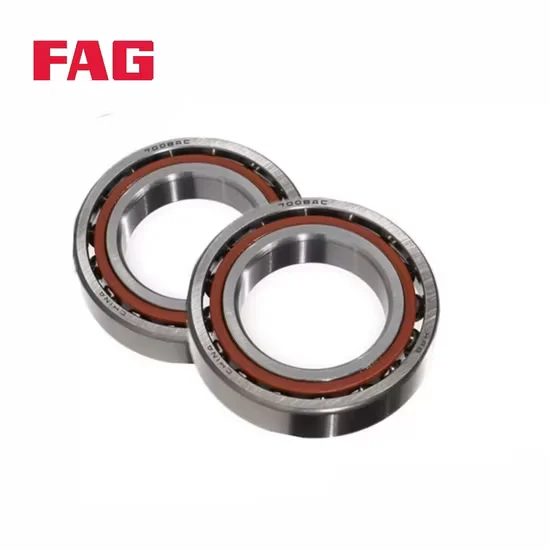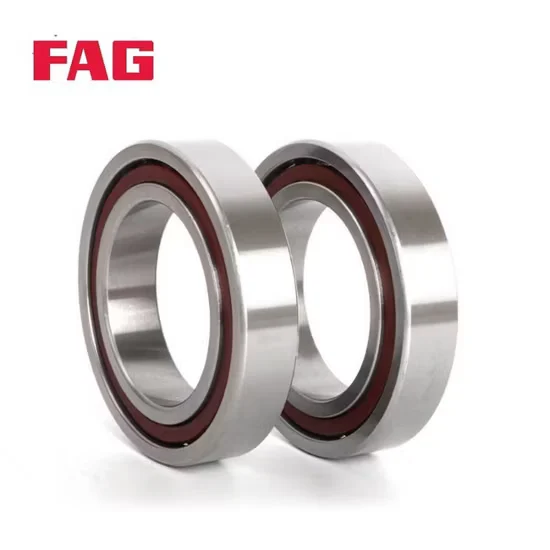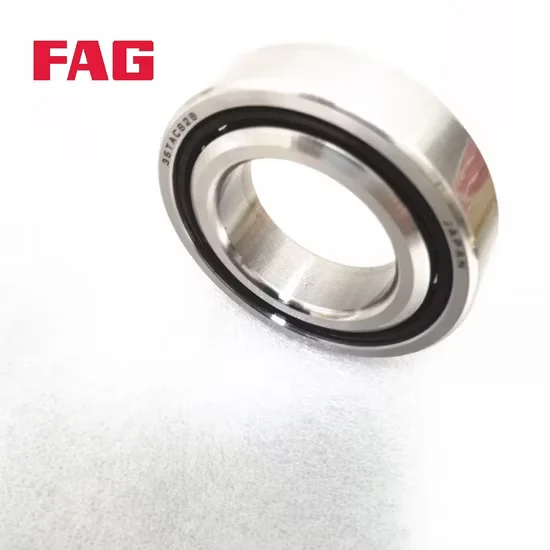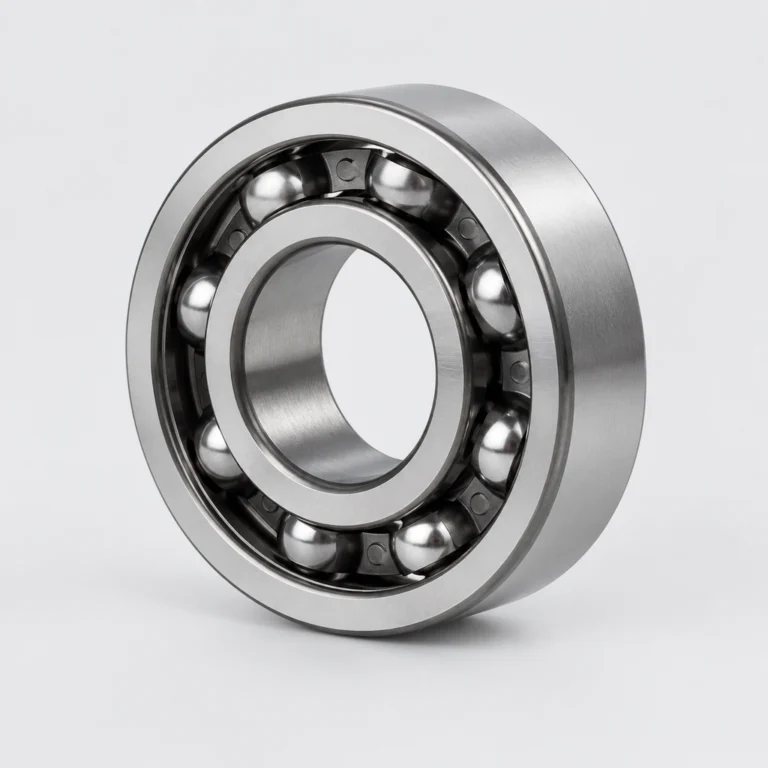
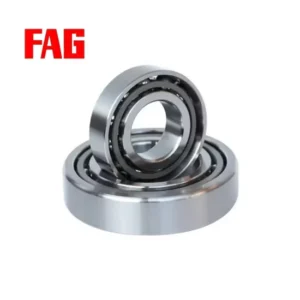
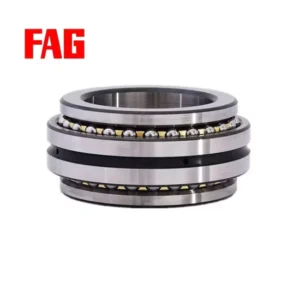
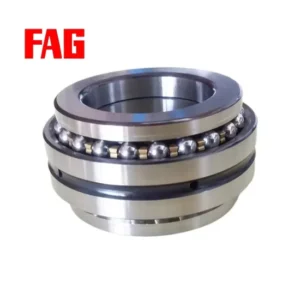
Product details
Description and application notes
Mixed-Brand Sourcing Consolidated — Procure this spindle bearing alongside other premium makes in a single shipment without juggling multiple vendors.
Technical Specifications
| Parameter | Value |
|---|---|
| Designation | FAG B7214-C-T-P4s-UL |
| Bearing Type | Angular Contact Ball Bearing |
| Precision Class | P4s |
| Contact Angle | 15° |
| Material | Bearing steel with alternative material options available |
| Certification | ISO compliant |
| Cross Reference | 1620415-00-K |
Suffixes T and UL require manufacturer catalog confirmation for specific cage and pairing details.
Application Suitability
| Industry | Typical Applications |
|---|---|
| Machine Tool Manufacturing | High-speed milling and grinding spindle assemblies |
| Precision Equipment | Rotary tables and indexing heads requiring tight tolerances |
| Robotics | High-accuracy joint actuators and positioning arms |
Why Spindle Vibration Ruins Tolerances Before the FAG B7214-C-T-P4s-UL angular contact ball bearing Fails
Micro-vibrations from mismatched precision classes degrade surface finishes long before catastrophic bearing seizure occurs.
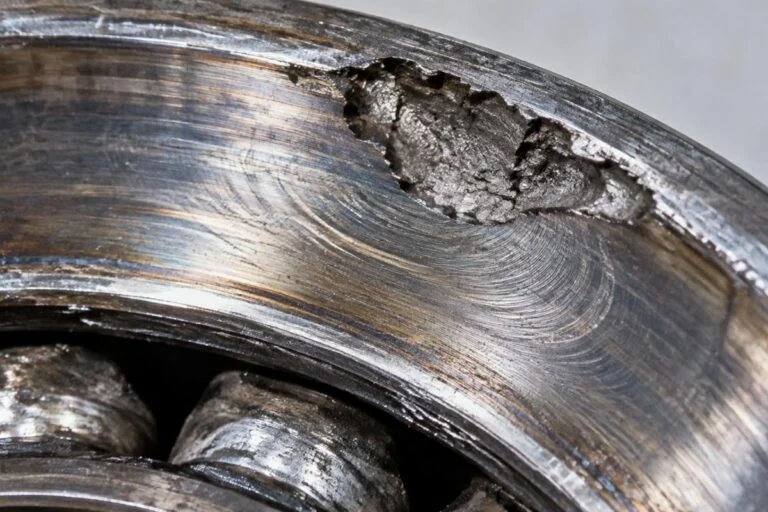
I have seen too many machining centers shut down because maintenance teams substituted standard P0 grade components for precision spindle applications. The resulting chatter marks ruin expensive workpieces, and the thermal buildup eventually locks the shaft. Upgrading to the correct precision class prevents these silent productivity killers. When a machine tool operates at high frequencies, even microscopic deviations in raceway geometry amplify into severe harmonic vibrations. This not only compromises the dimensional accuracy of the machined parts but also accelerates fatigue within the rolling elements. Addressing these root causes through proper component selection is essential for maintaining continuous production schedules.
Matching Precision to High-Speed Machining Demands
When outfitting a CNC milling center, the FAG B7214-C-T-P4s-UL angular contact ball bearing provides the dimensional stability needed for tight tolerances. Our engineering team frequently cross-references OEM part numbers like 1620415-00-K to ensure exact fitment, preventing the axial play that ruins micro-machining operations. Selecting the right component goes beyond merely matching the physical dimensions; it requires a deep understanding of the dynamic loads and thermal environments inherent in modern manufacturing. By aligning the specific precision attributes with the operational demands of the spindle, we help facilities avoid the costly trial-and-error process that often accompanies incorrect part substitution.
Thermal Growth and Lubrication in Spindle Environments
High-speed rotation generates significant friction heat, which alters internal clearance and compromises machining accuracy. A 15° contact angle helps manage axial loads while minimizing heat generation compared to steeper angles. Proper oil-air or grease lubrication must be maintained to prevent thermal runaway, especially when ambient shop temperatures fluctuate. The interaction between the rolling elements and the raceways creates localized hot spots that can degrade the lubricant film if not properly managed. Implementing a rigorous relubrication schedule and monitoring the thermal profile of the spindle housing ensures that the internal geometry remains stable throughout the machining cycle.
Decoding the P4s Class and Contact Angle Geometry
The P4s precision designation ensures tighter dimensional and running accuracy than standard ISO grades, which is non-negotiable for high-frequency spindle rotation. The 15° contact angle, indicated by the C suffix, optimizes the load distribution for combined radial and axial forces typical in milling operations. This geometry reduces friction heat, extending the operational window before relubrication is required. Furthermore, the strict tolerances associated with this precision class guarantee that the bearing operates with minimal eccentricity, which is crucial for achieving mirror-like surface finishes on hardened steels. Understanding how these specific geometric and dimensional attributes interact allows maintenance engineers to predict performance and schedule proactive interventions.
The Cascade Effect of Improper Spindle Component Selection
Installing an incorrect precision grade or mismatched pairing arrangement leads to premature wear and unplanned downtime. According to failure analysis frameworks, improper mounting and wrong clearance selection account for a significant share of early spindle failures. This results in scrapped batches, voided machine warranties, and costly emergency repairs. The financial impact extends far beyond the replacement cost of the component itself, encompassing lost production time, expedited shipping fees, and the labor required to teardown and rebuild the spindle assembly. Recognizing these hidden costs underscores the importance of sourcing exact-match replacements from verified channels.
Securing Authentic Spindle Components with Full Traceability
Sourcing genuine FAG B7214-C-T-P4s-UL angular contact ball bearing units requires strict channel verification to avoid counterfeit precision parts. We provide complete factory batch traceability for every shipment, ensuring the P4s tolerances match the original specifications. Our flexible consolidation allows you to mix this specific spindle part with other MRO requirements in a single container, backed by technical support for cross-referencing equivalent models. Managing the global supply chain for critical machine tool components can be fraught with risks, but our rigorous authentication protocols eliminate the uncertainty. By utilizing our extensive inventory and technical expertise, procurement teams can secure the exact components needed to keep their high-value assets running smoothly.
Documentation & Authenticity
- Certificate of Conformity confirming P4s precision tolerances for this specific batch.
- Original factory batch traceability documentation linking the part to its production run.
- Official app QR code authentication to verify the genuine origin of the spindle component.
- Dimensional and running accuracy inspection reports aligned with ISO standards.
Storage, Handling & Mounting
- Keep the precision components in original packaging to protect the P4s tolerance surfaces from shop dust and humidity.
- Use clean lint-free gloves during handling to prevent skin oils from corroding the high-accuracy bearing steel races.
- Employ induction heating for cylindrical bore mounting to avoid mechanical force damaging the 15° contact angle raceways.
- Follow strict oil-air lubrication protocols to maintain the thermal stability required for high-speed spindle operation.
Technical Review for Spindle Integration
Share your specific radial and axial load profiles, operating speeds, and thermal conditions so our team can verify the L10 life calculation. Providing the exact OEM equipment number allows us to cross-reference the 1620415-00-K designation and confirm fitment before dispatch. Our technical specialists will analyze your operational parameters to ensure that the selected component aligns perfectly with your spindle design, preventing premature failures caused by mismatched load capacities. This collaborative approach to procurement ensures that every replacement part integrates reliably into your existing machinery, maximizing uptime and protecting your manufacturing investments.
Frequently Asked Questions
Q: What does the P4s precision class mean for machine tool spindles?
A: The P4s class indicates extremely tight dimensional and running accuracy, significantly reducing vibration at high rotational speeds. This precision is critical for maintaining tight machining tolerances and achieving superior surface finishes on milled or ground workpieces in demanding production environments.
Q: How does the 15° contact angle affect spindle performance?
A: A 15° contact angle provides an optimal balance for combined radial and axial loads while minimizing friction heat. This geometry is ideal for high-speed milling spindles where thermal growth must be strictly controlled to maintain machining accuracy and prevent seizure.
Q: Can this bearing be cross-referenced with other brands?
A: Yes, this component cross-references to the 1620415-00-K designation. Our engineering team can also consult on equivalent models from other premium global brands if you require mixed-brand consolidation for your maintenance inventory or large-scale project upgrades across multiple manufacturing facilities.
Q: What are the common causes of premature failure in spindle bearings?
A: Premature failures typically stem from improper mounting techniques, inadequate lubrication, or contamination ingress. Using the correct precision class and following strict clean-room assembly protocols prevents the micro-vibrations and thermal runaway that destroy spindle assemblies and halt critical production schedules.
Q: How do I verify the authenticity of the supplied components?
A: Every shipment includes original factory batch traceability documentation and a Certificate of Conformity. You can also use the manufacturer's official app to scan the QR code on the packaging, ensuring the P4s precision parts are genuine and fully verified.