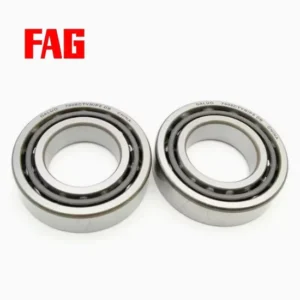
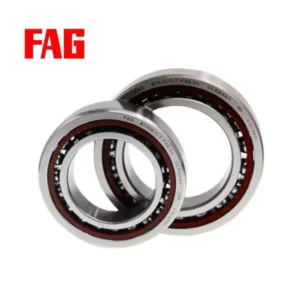
Product details
Description and application notes
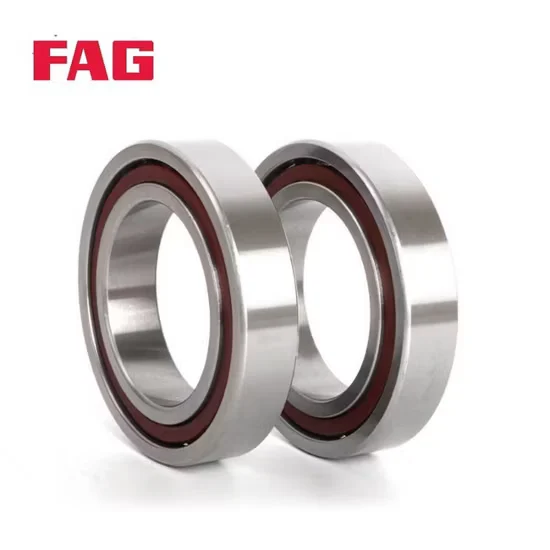
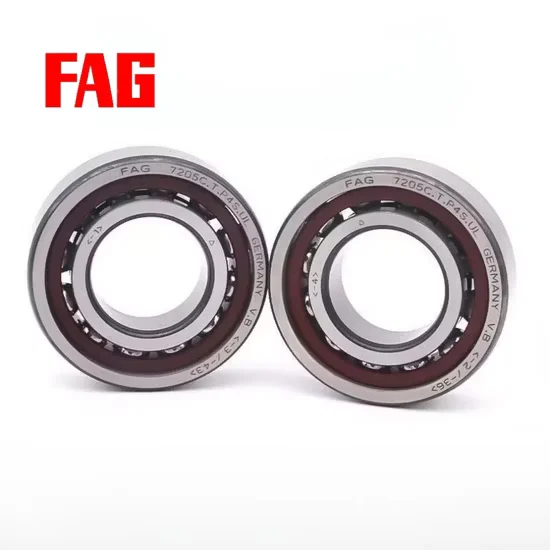
Original Batch Traceability — Every FAG HS7011-E-T-P4s-UL angular contact ball bearing ships with verifiable manufacturer lot documentation to guarantee spindle authenticity.
Technical Specifications
| Parameter | Value |
|---|---|
| Designation | HS7011-E-T-P4s-UL FAG |
| Bearing Type | Angular Contact Ball Bearing |
| Bore Diameter (d) | 55 mm |
| Outside Diameter (D) | 90 mm |
| Width (B) | 18 mm |
| Contact Angle | 25° (E suffix) |
| Precision Class | P4s (ISO) |
| Arrangement | Universal pairing (UL suffix) |
| Material | Bearing steel |
| Certification | ISO 492 |
Note: Suffixes HS, T, P4s, and UL require manufacturer catalog confirmation for exact technical definitions.
Application Suitability
| Industry | Typical Applications |
|---|---|
| Machine Tool Manufacturing | High-speed milling and grinding spindles |
| Precision Equipment | Rotary tables and indexing heads |
| Robotics | High-precision joint actuators |
Why Standard Tolerances Destroy High-Speed Spindles Before the First Shift
Installing a standard P0 class bearing in a high-speed spindle guarantees catastrophic vibration and immediate scrap.
I have seen procurement teams substitute standard angular contact bearings to save costs, only to watch the spindle fail during the initial run-in. The FAG HS7011-E-T-P4s-UL angular contact ball bearing eliminates this risk by maintaining tight dimensional tolerances required for rigid machining. When spindle runout exceeds micron-level thresholds, the entire machining center loses its accuracy, leading to rejected parts and damaged tooling. Sourcing authentic components is the only way to protect the capital investment in high-end CNC equipment.
Matching Spindle Dynamics with Precision Angular Contact Geometry
High-speed machining demands a balance between axial rigidity and thermal stability. The 25° contact angle in this configuration provides the necessary thrust capacity to handle heavy cutting forces without compromising rotational speed. Our engineering team frequently cross-references these specific spindle requirements to ensure the selected bearing matches the exact dynamic profile of the milling head.
Thermal Expansion and Lubrication in Continuous Milling Operations
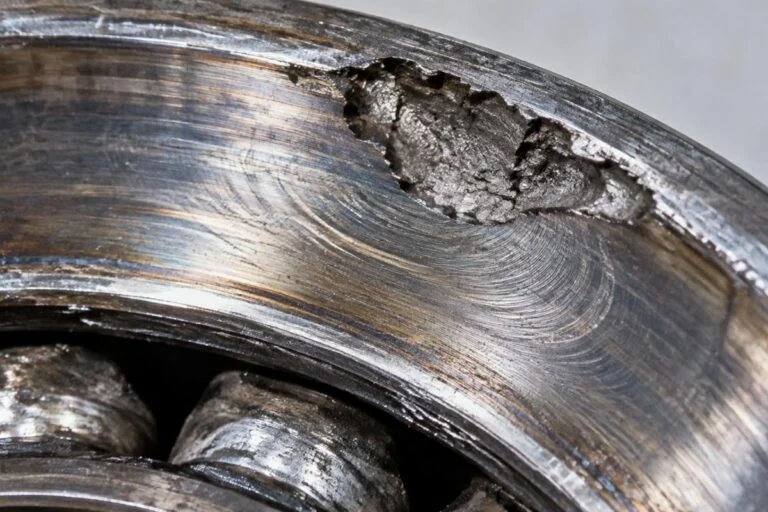
Spindles generate immense friction, causing inner rings to expand and alter internal clearance. A 25° contact angle helps manage the combined radial and axial loads typical in heavy milling, while the correct preload prevents skidding at high RPMs. Proper oil-air or grease lubrication is critical to dissipate heat and prevent cage wear. Without precise preload management, the rolling elements will slide rather than roll, leading to rapid surface degradation and catastrophic spindle seizure. Maintaining the correct operating temperature is essential for preserving the raceway geometry.
Decoding the Spindle Bearing Suffix Architecture
While this specific configuration utilizes high-purity bearing steel, spindle designs occasionally require ceramic hybrid variants to reduce centrifugal forces at extreme RPMs. The "E" designation confirms the 25° contact angle, optimizing the load distribution for combined axial and radial forces in vertical milling setups. Universal pairing allows these bearings to be mounted in back-to-back or face-to-face arrangements without needing matched factory sets, giving maintenance teams flexibility during rebuilds. The precision class ensures that the inner and outer rings maintain strict geometric tolerances, which is non-negotiable for achieving the surface finish requirements in modern CNC machining. This architectural precision directly translates to reduced chatter marks on the finished metal components.
The Financial Impact of Compromised Spindle Rigidity
Choosing a lower precision grade or incorrect contact angle leads to unplanned downtime and scrapped workpieces. When a spindle bearing fails prematurely, the cost of replacing the bearing is negligible compared to the machine teardown and lost production time. According to failure analysis frameworks, improper preload or tolerance stacking causes a significant share of premature spindle seizures.
Securing Authentic Spindle Components in a Complex Supply Chain
Sourcing genuine precision bearings requires strict verification, as counterfeit spindle bearings often fail within hours of operation. We provide complete traceability documentation for every FAG HS7011-E-T-P4s-UL angular contact ball bearing, ensuring the metallurgical integrity matches the manufacturer's specifications. Our technical team verifies the exact suffix combinations to prevent mismatched preload sets, which is a common error when sourcing from unauthorized distributors. We also consolidate mixed-brand orders, allowing you to source both the spindle bearings and the supporting cylindrical roller bearings in a single shipment. This consolidated approach minimizes freight costs and simplifies the procurement process for complex machine tool rebuilds.
Documentation & Authenticity
- Original manufacturer batch traceability confirming the production lot for this specific spindle series.
- Dimensional and running accuracy inspection reports validating the strict tolerance class before dispatch.
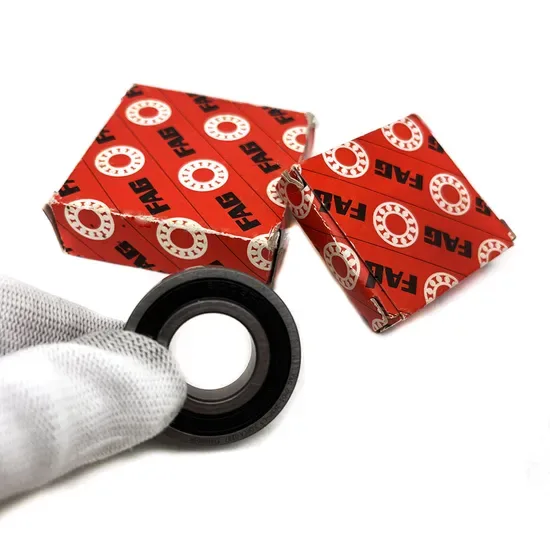
- Anti-counterfeit verification labels intact on the original packaging to guarantee material authenticity.
- Certificate of Conformity aligning with international precision standards for machine tool components.
Storage, Handling & Mounting
- Keep the universal pairing set sealed in its original foil packaging until the exact moment of spindle assembly to prevent moisture ingress.
- Use clean, lint-free gloves when handling the bearing rings to avoid transferring skin acids that compromise the high-precision raceway finish.
- Follow the manufacturer's specified induction heating parameters for the inner ring to maintain the precise interference fit required for high-speed spindles.
- Verify the V-mark alignment on the outer rings during mounting to ensure the correct back-to-back or face-to-face preload distribution.
Engineering Support for Spindle Rebuilds and Upgrades
To ensure optimal spindle performance, please share your specific machining parameters, including maximum RPM, cutting forces, and operating temperatures. Providing the original equipment manufacturer spindle drawing or part number allows our technical team to verify the exact preload requirements and cross-reference equivalent configurations. This data enables us to calculate the expected L10 life and recommend the appropriate lubrication strategy for your specific milling application.
Frequently Asked Questions
Q: How does the 25° contact angle affect spindle performance compared to a 15° design?
A: A 25° contact angle provides higher axial rigidity, making it ideal for spindles subjected to heavy thrust loads during milling or drilling. While a 15° angle offers slightly higher speed capabilities, the 25° design ensures better deflection control under heavy cutting forces, maintaining tighter machining tolerances and improving the overall surface finish of the workpiece.
Q: What does universal pairing mean for spindle maintenance and installation?
A: Universal pairing allows these bearings to be installed in any combination, such as back-to-back or face-to-face, without requiring a factory-matched set. This flexibility significantly reduces inventory requirements for maintenance teams, as any two bearings with the same universal pairing designation can be paired together to achieve the desired internal preload during spindle reassembly.
Q: How can we verify the authenticity of the precision class before installation?
A: Authenticity is verified through the original manufacturer's batch traceability documentation and anti-counterfeit packaging labels. We supply dimensional inspection reports that confirm the bearing meets the strict geometric tolerances required for this precision class. Additionally, the physical markings on the bearing rings can be cross-referenced with the official catalog to ensure the suffixes match the specified preload.
Q: What lubrication method is recommended for high-speed machine tool spindles?
A: High-speed spindles typically require oil-air lubrication or specialized high-speed spindle grease to manage thermal expansion and minimize friction. The chosen lubricant must have excellent thermal stability and anti-wear properties to protect the raceways at elevated RPMs. We recommend consulting the machine tool builder's specifications to determine the exact grease fill quantity or oil-air flow rate.