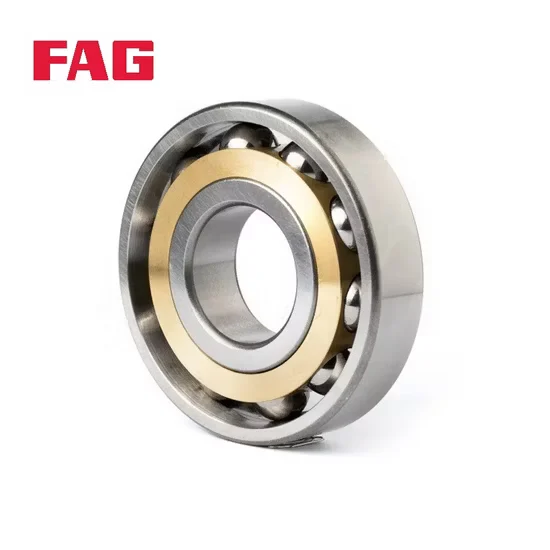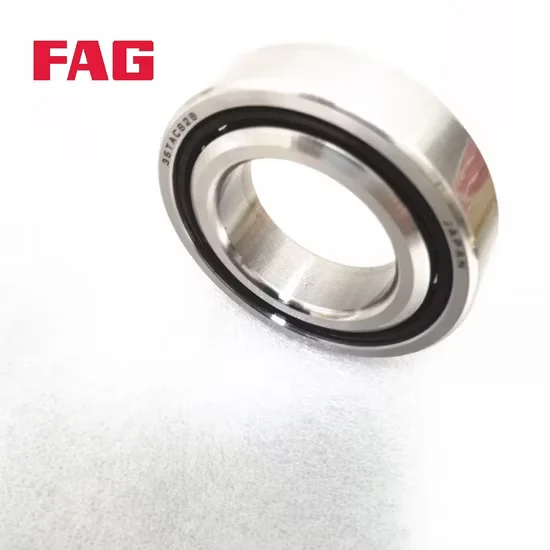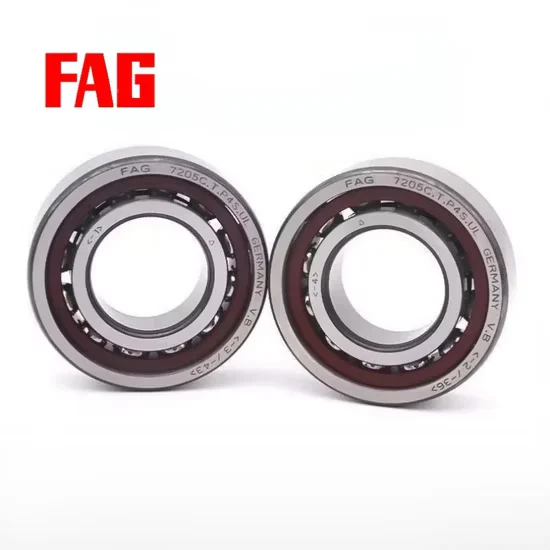
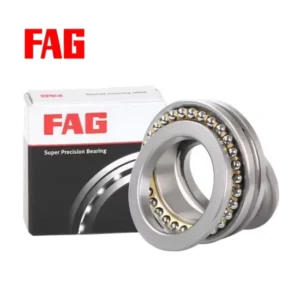
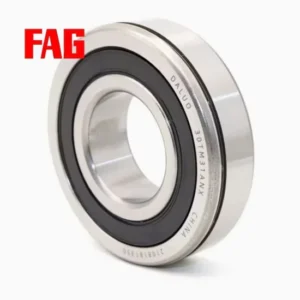
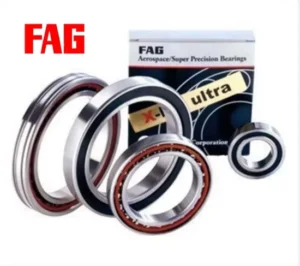
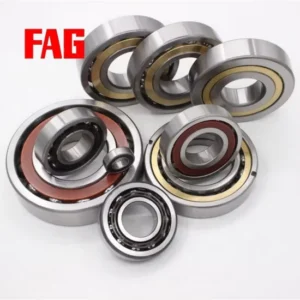
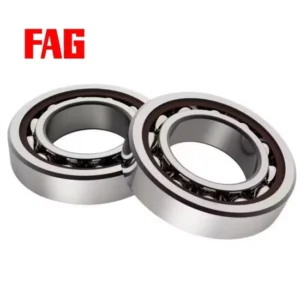
Product details
Description and application notes
Official App QR Verification — Every FAG B71906-E-T-P4s-Dul angular contact ball bearing ships with a scannable origin code for instant authenticity confirmation.
Technical Specifications
| Parameter | Value |
|---|---|
| Designation | FAG B71906-E-T-P4s-Dul |
| Bearing Type | Angular Contact Ball Bearing |
| Precision Class | P4s |
| Contact Angle | 25° |
| Material | Bearing steel (ceramic options available) |
| Arrangement | Single-Row Bearing |
| Series | B719 |
| Origin | Jiangsu China |
Note: The 'T' and 'Dul' suffixes remain unverified and require manufacturer catalog confirmation for exact cage or clearance specifics.
Application Suitability
| Industry | Typical Applications |
|---|---|
| Packaging Machinery | High-speed form-fill-seal machine spindles |
| Machine Tools | Precision grinding and milling spindles |
| Automation & Robotics | High-speed rotary actuators and robotic joints |
| Precision Equipment | Optical scanning mechanisms and indexing tables |
Why Spindle Vibration Ruins Packaging Output Before the FAG B71906-E-T-P4s-Dul angular contact ball bearing Fails
Mismatched precision tolerances cause micro-vibrations that destroy product sealing quality long before catastrophic bearing failure.
In my years analyzing packaging machinery teardowns, I have seen countless main spindles scrapped because standard P4 bearings were forced into P4s applications. The resulting vibration exceeds the threshold for delicate film sealing, causing massive material waste and inconsistent package dimensions. Sourcing a genuine FAG B71906-E-T-P4s-Dul angular contact ball bearing ensures the dimensional accuracy required to maintain tight film tension and prevent seal leakage. Procurement engineers must prioritize verified precision grades to protect the overall equipment effectiveness of the packaging line.
Matching the 25° Contact Angle to High-Speed Spindle Dynamics
The 25° contact angle in this FAG B71906-E-T-P4s-Dul angular contact ball bearing provides the exact balance of axial rigidity and radial load capacity needed for packaging spindles. When film tension fluctuates at high RPMs, the bearing must absorb sudden axial thrusts without deflecting. Our engineering team frequently cross-checks these load profiles to ensure the single-row arrangement handles the specific dynamic forces of your form-fill-seal equipment.
Navigating Thermal Growth and Lubrication in Continuous Packaging Lines
Packaging spindles run continuously, generating friction heat that alters internal clearance and compromises P4s precision. If the lubrication interval is miscalculated, the grease degrades rapidly, leading to increased friction and thermal expansion of the steel rings. Proper oil-air or grease lubrication must be matched to the exact speed limit of the B719 series to prevent raceway smearing and surface fatigue. Furthermore, sealing effectiveness is critical to keep packaging dust, paper fibers, and adhesive residue out of the rolling elements, which would otherwise accelerate wear and degrade the 25° contact angle performance.
Decoding the P4s Precision and Single-Row Construction Options
The P4s precision class dictates exceptionally tight tolerances for both dimensional accuracy and running precision, which is non-negotiable for high-speed spindles where runout causes chatter marks on packaged goods. The single-row construction of the B719 series, available in standard bearing steel or hybrid ceramic variants, offers high load-carrying capacity while maintaining a compact cross-section suitable for space-constrained packaging heads. The 25° contact angle, denoted by the E suffix, optimizes the load distribution across the raceways, ensuring stability under combined loading conditions typical in precision machinery. This specific geometry allows the bearing to handle the axial thrust generated during rapid acceleration and deceleration cycles of the form-fill-seal mechanisms.
The Hidden Downtime Costs of Precision Downgrading
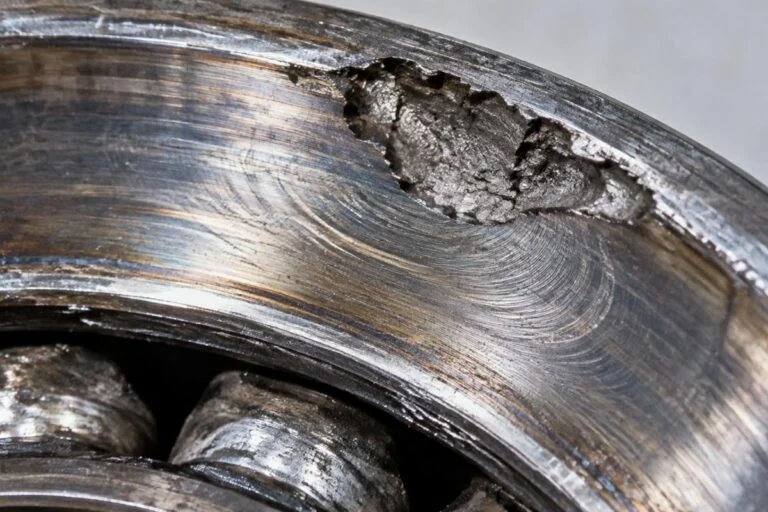
Substituting a standard precision bearing for a P4s grade in a high-speed packaging spindle inevitably leads to unplanned downtime and compromised product quality. According to ISO 15243 failure mode classifications, improper precision matching accelerates surface fatigue and raceway spalling due to uneven load distribution across the rolling elements. This premature failure not only halts the production line but also risks catastrophic damage to the adjacent spindle housing, shaft journals, and expensive sealing mechanisms, multiplying the replacement costs far beyond the initial bearing savings.
Securing Traceable P4s Spindle Bearings for Urgent Maintenance
Procuring high-precision spindle bearings often involves managing long lead times and questionable supply chains that jeopardize machine uptime. We maintain massive spot inventory of premium bearing lines, allowing us to fulfill single-unit emergency orders for your packaging lines without forcing full-container minimums. Our technical team verifies the exact P4s tolerance and cross-references equivalent models to prevent the costly mistake of installing mismatched clearance or contact angle variants. Every shipment includes complete traceability documentation to guarantee authentic origin, ensuring your maintenance crew installs a verified component that meets the rigorous demands of continuous packaging operations.
Documentation & Authenticity
- Certificate of Conformity confirming P4s precision grade and material origin.
- Original factory batch tracing with scannable QR codes for app verification.
- Dimensional and running accuracy inspection reports aligned with ISO standards.
- Material certification verifying the specific steel grade used in the B719 series.
Storage, Handling & Mounting
- Store the single-row bearing in its original moisture-proof packaging to prevent corrosion on the high-precision P4s raceways.
- Use clean, lint-free gloves during handling to avoid transferring skin acids to the 25° contact angle raceways.
- Mount using induction heating for the inner ring to preserve the tight P4s dimensional tolerances during assembly.
- Keep the bearing sealed until the exact moment of installation to prevent packaging dust contamination in the B719 series.
Engineering Data Required for Spindle Selection Verification
To ensure this bearing perfectly matches your packaging machinery, please provide the specific radial and axial load profiles along with the maximum operating RPM. Sharing the OEM equipment number or existing spindle housing dimensions allows our technical team to perform a comprehensive L10 life calculation and cross-reference validation. Detailing the operating temperature and lubrication method will help us confirm the suitability of the internal clearance and cage design.
Frequently Asked Questions
Q: How can I verify the authenticity of the FAG B71906-E-T-P4s-Dul angular contact ball bearing?
A: Every genuine bearing features a unique Data Matrix code on the packaging. You can scan this code using the manufacturer's official smartphone application to instantly verify the production batch, origin, and precision specifications, ensuring you receive authentic P4s grade components for your packaging spindles.
Q: What does the P4s precision class mean compared to standard P4?
A: The P4s designation indicates enhanced running accuracy and tighter dimensional tolerances specifically optimized for high-speed spindle applications. While standard P4 covers general precision requirements, P4s ensures significantly reduced runout and vibration, which is critical for maintaining film tension in high-speed packaging machinery.
Q: How should I interpret the specific suffixes in this designation?
A: The 'T' and 'Dul' suffixes in the FAG B71906-E-T-P4s-Dul angular contact ball bearing designation require direct confirmation from the manufacturer's current catalog. These typically relate to specific cage materials, special clearance classes, or unique pairing configurations that must be verified before finalizing your procurement.
Q: What are the cross-reference precautions for angular contact ball bearings?
A: When cross-referencing to other brands, you must ensure the contact angle, precision class, and internal clearance match exactly. A 25° contact angle bearing cannot be substituted with a 15° or 40° variant without altering the spindle's axial rigidity, potentially causing severe vibration and premature failure in precision packaging equipment.