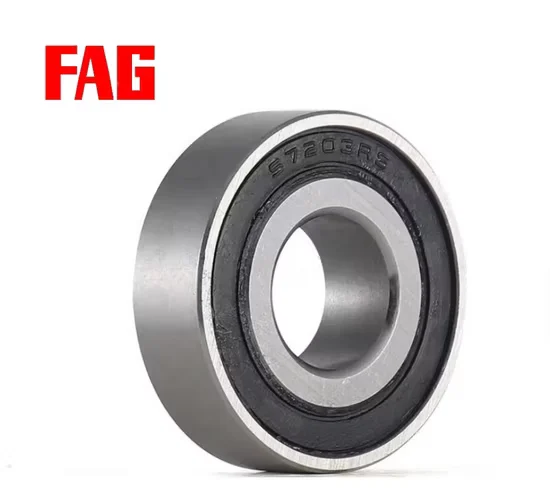
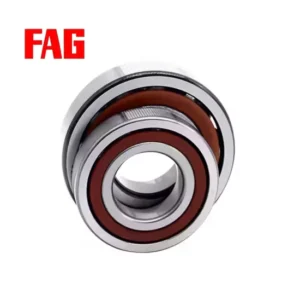
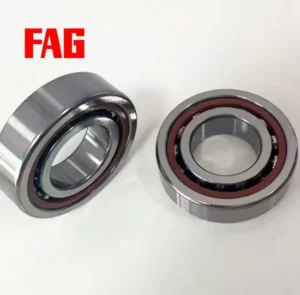
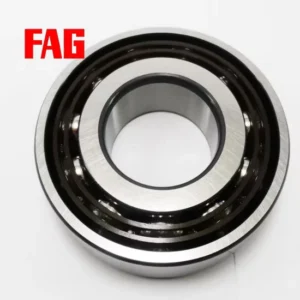
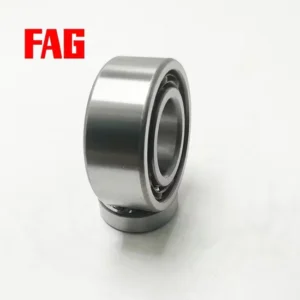
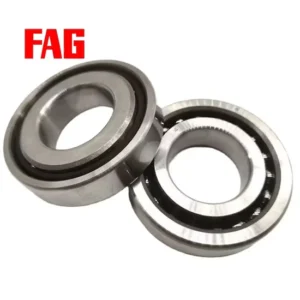
Product details
Description and application notes
Mixed-Brand Sourcing — Consolidate SKF, FAG, and NSK spindle bearings into a single shipment without juggling multiple vendor accounts.
Technical Specifications
| Parameter | Value |
|---|---|
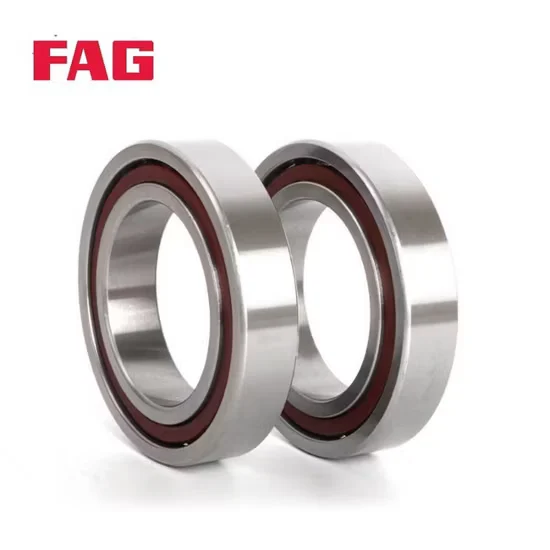
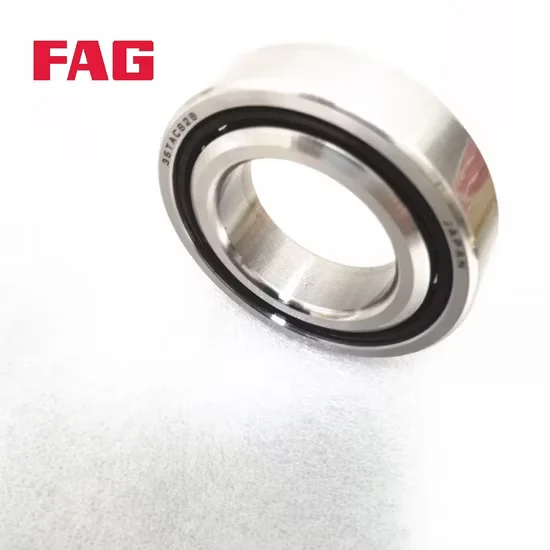
| Designation | FAG B71919-E-T-P4s-UL |
| Bearing Type | Angular Contact Ball Bearing |
| Series | B719 |
| Precision Class | P4s (ISO) |
| Contact Angle | 25° |
| Material | Steel |
| Origin | Jiangsu China |
| HS Code | 8482800000 |
Note: Suffixes B719, T, and UL require manufacturer catalog confirmation for specific design variations.
Application Suitability
| Industry | Typical Applications |
|---|---|
| Machine Tools | High-speed precision spindle configurations |
| Pumps & Reducers | High-rigidity rotary shafts requiring axial thrust capacity |
| General Manufacturing | Precision rotary tables and indexing heads |
Why Standard Precision Grades Destroy High-Speed Spindles
Upgrading to P4s tolerance prevents catastrophic thermal seizure during continuous high-RPM machining.
I have seen too many machine tool spindles fail prematurely because standard P0 or P5 grade bearings were installed to cut initial costs. When a spindle runs at high speeds, microscopic dimensional deviations cause severe vibration and excessive heat generation, eventually leading to bearing seizure. The internal friction generated by out-of-round components rapidly degrades the lubricant film, causing metal-to-metal contact. Sourcing a genuine FAG B71919-E-T-P4s-UL angular contact ball bearing ensures the exact running accuracy needed to maintain thermal stability and protect the integrity of the machined workpiece. Replacing a failed spindle assembly involves not only the cost of the new components but also the extensive labor required for reassembly and recalibration.
Matching Spindle Dynamics with Exact Tolerance Grades
Precision machining demands extreme rotational accuracy, which is exactly where this FAG B71919-E-T-P4s-UL angular contact ball bearing excels. The tighter dimensional tolerances minimize runout, ensuring the cutting tool maintains its precise path even under heavy axial loads. Modern CNC machining centers operate at rotational speeds that amplify even the slightest geometric imperfection, turning minor deviations into destructive harmonic vibrations. Our sourcing network guarantees that every unit arrives with complete traceability, protecting your production line from counterfeit risks that often plague the precision bearing market. By maintaining strict quality control over the supply chain, we ensure that the metallurgical integrity and geometric precision of the bearing remain uncompromised from the factory floor to your maintenance shop.
Overcoming Thermal and Axial Load Challenges in Spindles
High-speed spindles generate significant internal friction, making thermal expansion a primary cause of dimensional instability. The 25° contact angle provides the necessary axial rigidity to handle thrust loads generated during milling operations while maintaining optimal load distribution across the rolling elements. As the spindle accelerates, centrifugal forces push the rolling elements outward, altering the internal contact geometry and increasing the operational temperature. Proper lubrication is equally critical; oil-air or oil-mist systems are typically required to manage heat dissipation without introducing excessive churning losses. If the thermal expansion is not properly managed through precise initial clearance selection, the bearing will experience excessive preload, leading to rapid wear and eventual seizure of the spindle assembly.
Decoding the P4s Precision and 25° Contact Geometry
The P4s precision class dictates exceptionally tight tolerances for both bore and outside diameter, alongside stringent running accuracy limits that far exceed standard P4 or ABEC 7 grades. This extreme precision ensures the inner and outer rings remain perfectly concentric, eliminating the high-frequency vibration that ruins surface finishes on machined parts. Furthermore, the 25° contact angle strikes an ideal balance between radial load capacity and axial rigidity, making it the preferred geometry for spindle configurations that experience combined loading. The specific cage design incorporated in this series is engineered to minimize friction and maintain consistent rolling element spacing at elevated rotational speeds. This combination of geometric accuracy and optimized internal kinematics allows the spindle to achieve the high metal removal rates required in modern aerospace and automotive manufacturing.
The Financial Impact of Compromised Spindle Accuracy
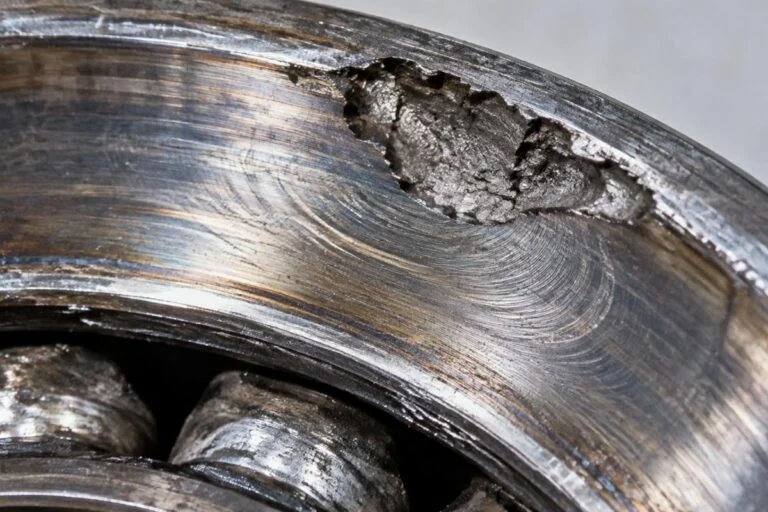
Installing a lower-grade bearing in a precision spindle inevitably leads to unplanned downtime and scrapped workpieces. According to failure analysis frameworks like ISO 15243, improper clearance or inadequate precision directly accelerates surface fatigue and smearing on the raceways. The resulting catastrophic spindle failure not only requires expensive replacement parts but also halts the entire production cell, causing severe financial losses that dwarf the initial savings on the bearing itself. Beyond the immediate repair costs, the loss of dimensional accuracy compromises the quality of the output, leading to rejected batches and damaged customer relationships. Investing in verified, high-precision components is ultimately a risk mitigation strategy that safeguards the overall profitability of the manufacturing operation.
Securing Authentic Precision Components for Critical Applications
Sourcing genuine high-precision components requires rigorous verification, which is why we provide complete batch traceability for every FAG B71919-E-T-P4s-UL angular contact ball bearing we supply. We cross-reference the exact suffix requirements to ensure the preload and cage design match your specific spindle OEM specifications, preventing dangerous mismatches. Our inventory covers thousands of precision part numbers, allowing us to fulfill urgent maintenance orders without the typical multi-week lead times associated with direct factory channels. The precision bearing market is unfortunately saturated with refurbished or counterfeit units that fail under actual operating loads. By enforcing strict authentication protocols and maintaining direct relationships with authorized distribution channels, we guarantee that every bearing delivered to your facility meets the exacting standards required for critical spindle applications.
Documentation & Authenticity
- Certificate of Conformity verifying the P4s precision grade and 25° contact angle specifications.
- Original batch traceability documents linking the bearing to the manufacturer's production facilities.
- Official app QR codes for instant digital authentication of the FAG B71919-E-T-P4s-UL unit.
- Dimensional and running accuracy inspection reports confirming strict ISO tolerance compliance.
Storage, Handling & Mounting
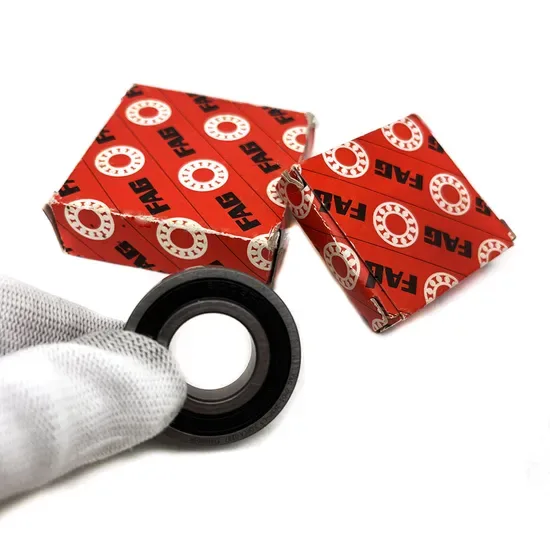
- Keep the original packaging sealed until mounting to protect the P4s precision raceways from ambient dust and moisture.
- Use clean, lint-free gloves when handling the bearing to prevent corrosive sweat from compromising the steel surfaces.
- Verify the exact mounting orientation and preload marks before installation to maintain the intended axial rigidity.
- Apply induction heating strictly within the recommended thermal limits to avoid altering the dimensional stability of the inner ring.
Preparing Your Technical Requirements for Selection Review
To ensure optimal spindle performance, please share your specific radial and axial load profiles, operating speeds, and thermal conditions for L10 life recalculations. Providing the original OEM equipment model number allows our engineering team to perform a precise cross-reference check and verify the exact preload requirements. This technical review guarantees that the selected bearing configuration aligns perfectly with your machining tolerances.
Frequently Asked Questions
Q: How does the P4s precision class compare to standard P4 or ABEC 7 grades?
A: The P4s class enforces significantly tighter tolerances for dimensional and running accuracy than standard P4 or ABEC 7 grades. This extreme precision minimizes spindle runout and high-frequency vibration, which is critical for achieving superior surface finishes in high-speed machining applications while preventing premature thermal seizure.
Q: What does the 25° contact angle mean for my spindle application?
A: A 25° contact angle provides an optimal balance between radial load capacity and axial rigidity. This geometry ensures the bearing can effectively handle the heavy axial thrust loads generated during milling operations while maintaining the precise rotational accuracy required for high-speed precision spindles.
Q: How can I verify the authenticity of this FAG spindle bearing?
A: You can verify authenticity by scanning the official QR code on the packaging using the manufacturer's dedicated app. Additionally, we provide original batch traceability documentation and dimensional inspection reports that confirm the exact P4s precision specifications before the bearing leaves our facility.
Q: What precautions should I take when cross-replacing spindle bearings?
A: When replacing spindle bearings, you must verify that the exact suffix configuration, including contact angle and preload class, matches the original OEM design. Mismatched clearances or incorrect contact angles will alter the spindle's rigidity and thermal behavior, leading to severe vibration and premature failure.